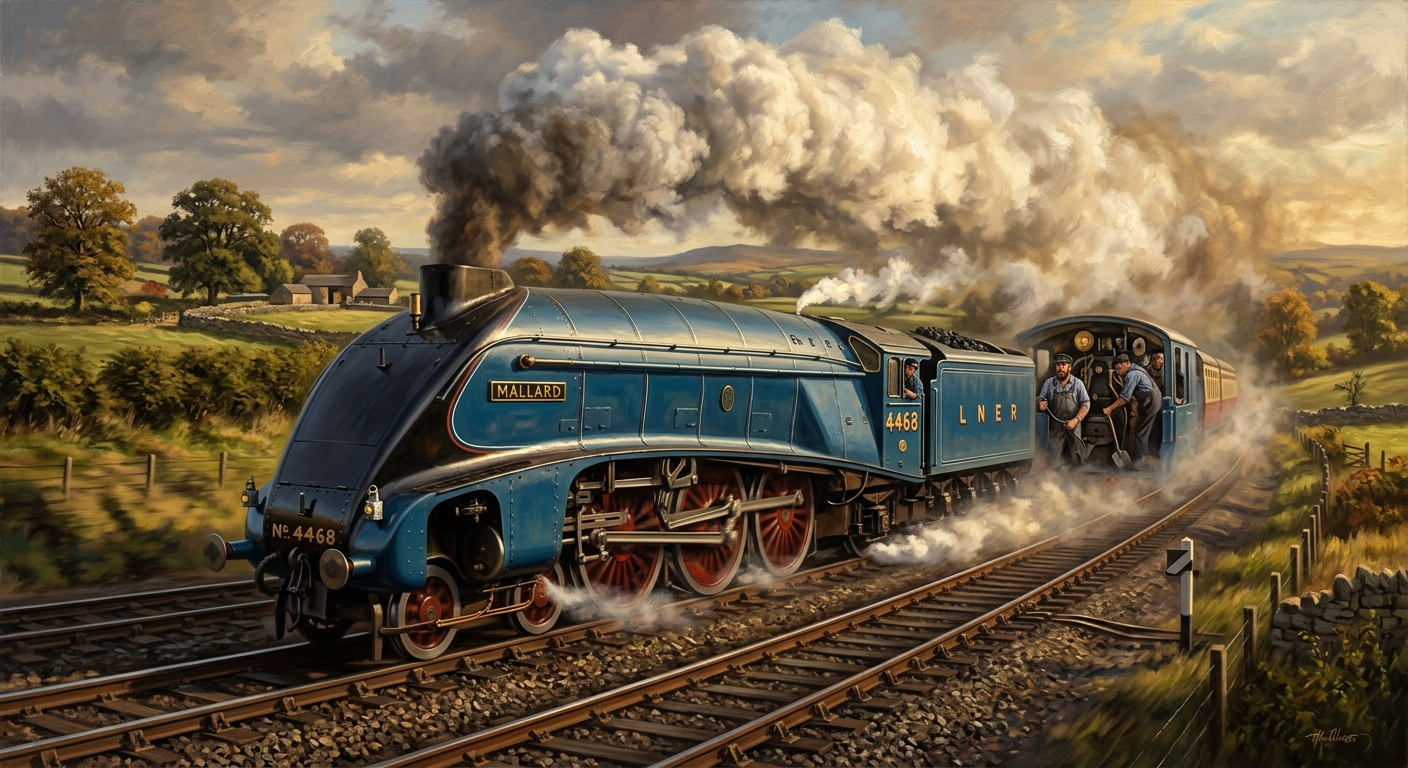
125 MPH and Zero Computers: What the Mallard Teaches Us About Peak Performance
On July 3, 1938, a British steam locomotive called the Mallard did something nobody had ever done before — it hit 125.88 miles per hour on a stretch of track in Lincolnshire, England, setting a world speed record for steam locomotives that has never been broken. No GPS. No sensors. No machine learning. Just brilliant engineering, a skilled crew, and the willingness to push a machine to its absolute edge.
Here's what gets me about this story: the Mallard's chief designer, Nigel Gresley, had been iterating on this locomotive class for years. The A4 Pacifics weren't built for that record run — they were already exceptional workhorses pulling passenger trains across Britain. But on that one July day, with the right conditions and the right team, the cumulative effect of all those small engineering decisions — the streamlined casing, the valve timing, the boiler pressure — stacked up into something historic. That's a pattern worth recognizing. In tech, we often want the breakthrough now, in the next sprint, in the next release. But more often, record-breaking performance is the output of dozens of quiet, disciplined improvements that nobody tweets about.
There's also something worth sitting with in the fact that this record has stood for 86 years. Steam locomotion is a closed chapter — nobody is going to beat it. And that's actually kind of beautiful. Whatever you're building right now, whatever problem you're solving for your clients, you have a window to do something that defines the category. The Mallard didn't just go fast; it set the ceiling for an entire era of technology. What would it look like to build your systems, your processes, or your team with that same intention — not just to be good enough, but to set the standard? That's the question worth carrying into your work today.