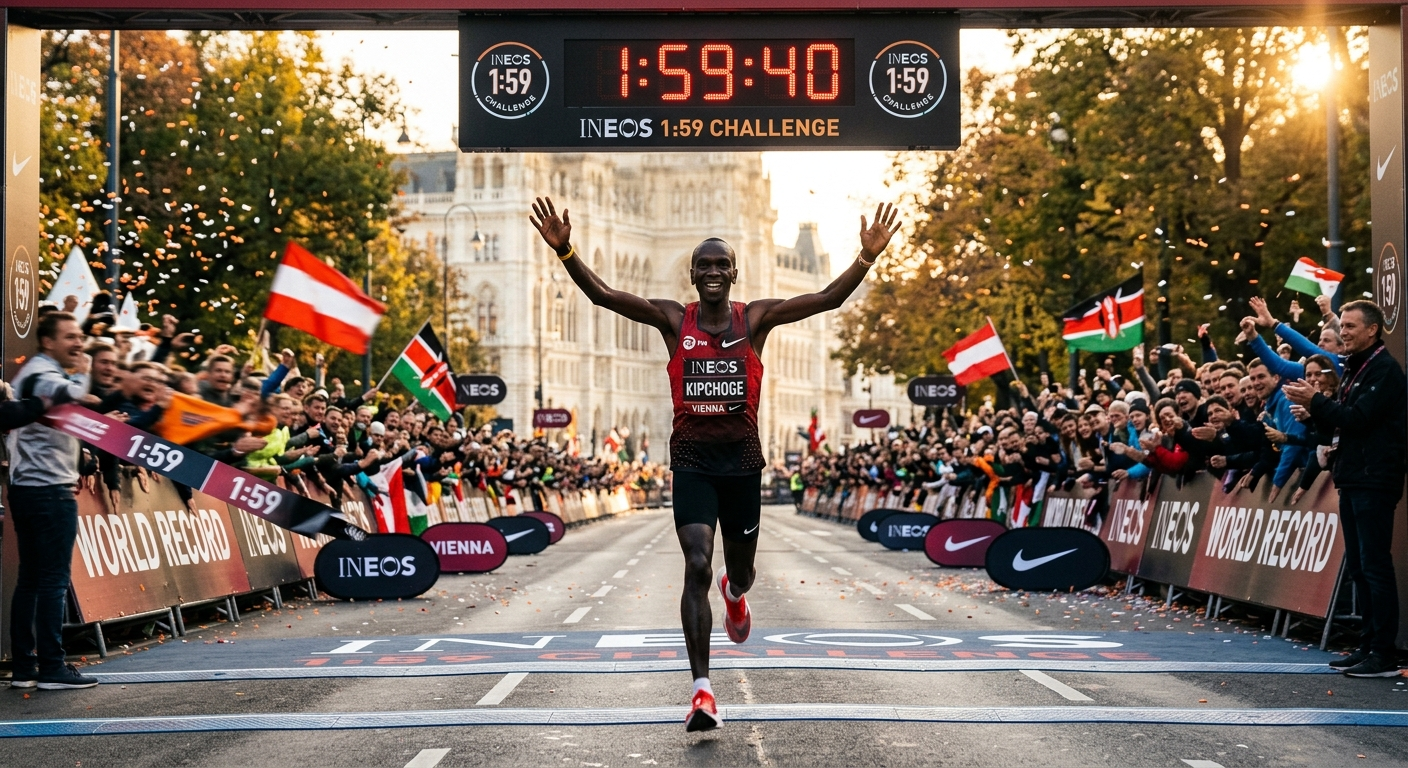
No One Believed It Was Possible — Until It Was
On October 12, 2019, Eliud Kipchoge ran 26.2 miles in 1 hour, 59 minutes, and 40 seconds in Vienna, Austria. Just like that, a barrier that sports scientists had debated for decades — some calling it physiologically impossible — quietly ceased to exist. The crowd went wild. The world went quiet for a moment. And then, almost immediately, everyone started wondering: what else have we been wrong about?
That question is worth sitting with, especially in tech. How many architectural decisions, product constraints, or "we tried that before" assumptions are living in your codebase — or your team's collective memory — as invisible two-hour walls? Kipchoge didn't just train harder; he rebuilt the entire system around the goal. Custom shoes, a rotating team of pacesetters, precision nutrition, meticulous course selection. He wasn't grinding against the old framework — he redesigned the conditions for success. Sound familiar? That's exactly what the best software teams do when they stop accepting inherited limitations and start asking better questions.
The other thing worth noting: Kipchoge didn't sprint to the finish line in a panic. He ran with almost eerie calm and consistency — even smiling near mile 25. There's a real leadership lesson buried in that image. Sustainable performance, in running or in building products, isn't about one heroic burst of effort. It's about the discipline of the process, the trust in your team, and the quiet confidence that comes from doing the preparation nobody sees. Whatever "sub-two-hour" looks like in your work right now — a product launch, a system migration, a goal everyone's told you is unrealistic — the Kipchoge playbook says: redesign the system, trust the process, and run your race.