3 Billion Miles and One Perfect Moment: What New Horizons Teaches Us About Long-Term Vision
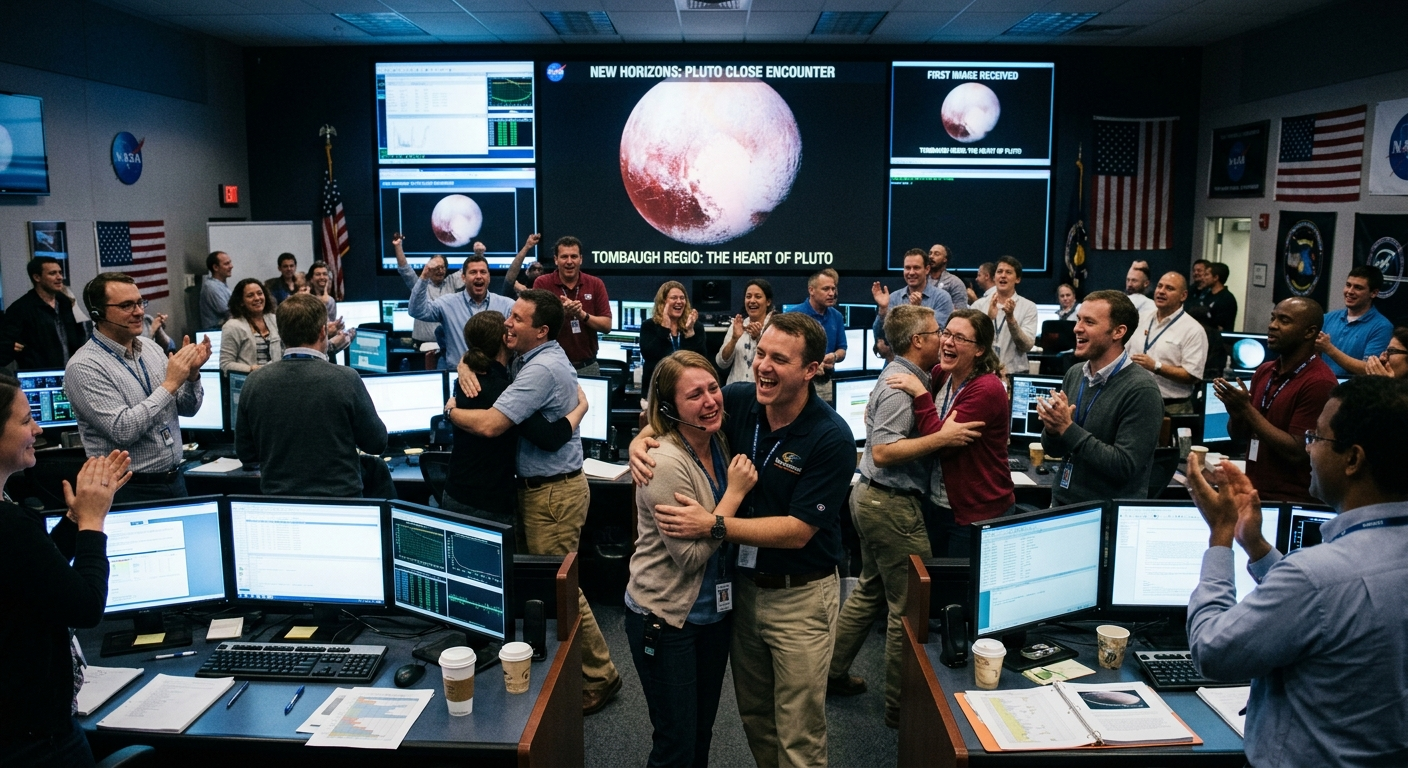
On July 14, 2015, NASA's New Horizons probe did something that still gives me chills when I think about it. After traveling 3 billion miles over 9.5 years, it zipped past Pluto at 31,000 mph — spending just a few precious hours in range — and sent back the first close-up photographs humanity had ever seen of that distant, icy world. The team that launched this mission in 2006 had to trust that a spacecraft the size of a grand piano would still be functioning nearly a decade later, aimed at a target no wider than the United States.
Here's what really gets me about this story from a tech and business perspective: the engineers who hit "launch" in 2006 were committing to a plan they couldn't fully control, couldn't easily course-correct, and wouldn't see pay off for almost ten years. That's the kind of long-term thinking that's genuinely rare — and genuinely hard. In software and consulting, we're constantly pressured to show ROI in 90-day sprints. And sprint culture is great, don't get me wrong. But some of the best investments you can make in your tech infrastructure, your team's skills, or your product architecture are the ones that feel slow and invisible for years before they suddenly become your biggest competitive advantage. The "boring" refactor nobody wanted to prioritize. The junior developer you invested in mentoring. The API documentation you finally got right. These are your New Horizons missions.
The other thing worth sitting with: when New Horizons finally arrived, it revealed that Pluto had a massive heart-shaped plain of nitrogen ice — something nobody predicted. After nearly a decade of work, the universe handed the team a complete surprise, and it was better than what they'd imagined. That's the nature of doing hard, ambitious work. You think you know what you're building toward, and sometimes you get there and discover the outcome is stranger and more wonderful than your original spec. Stay committed to the mission. Trust the trajectory. And leave room to be surprised by what you find.