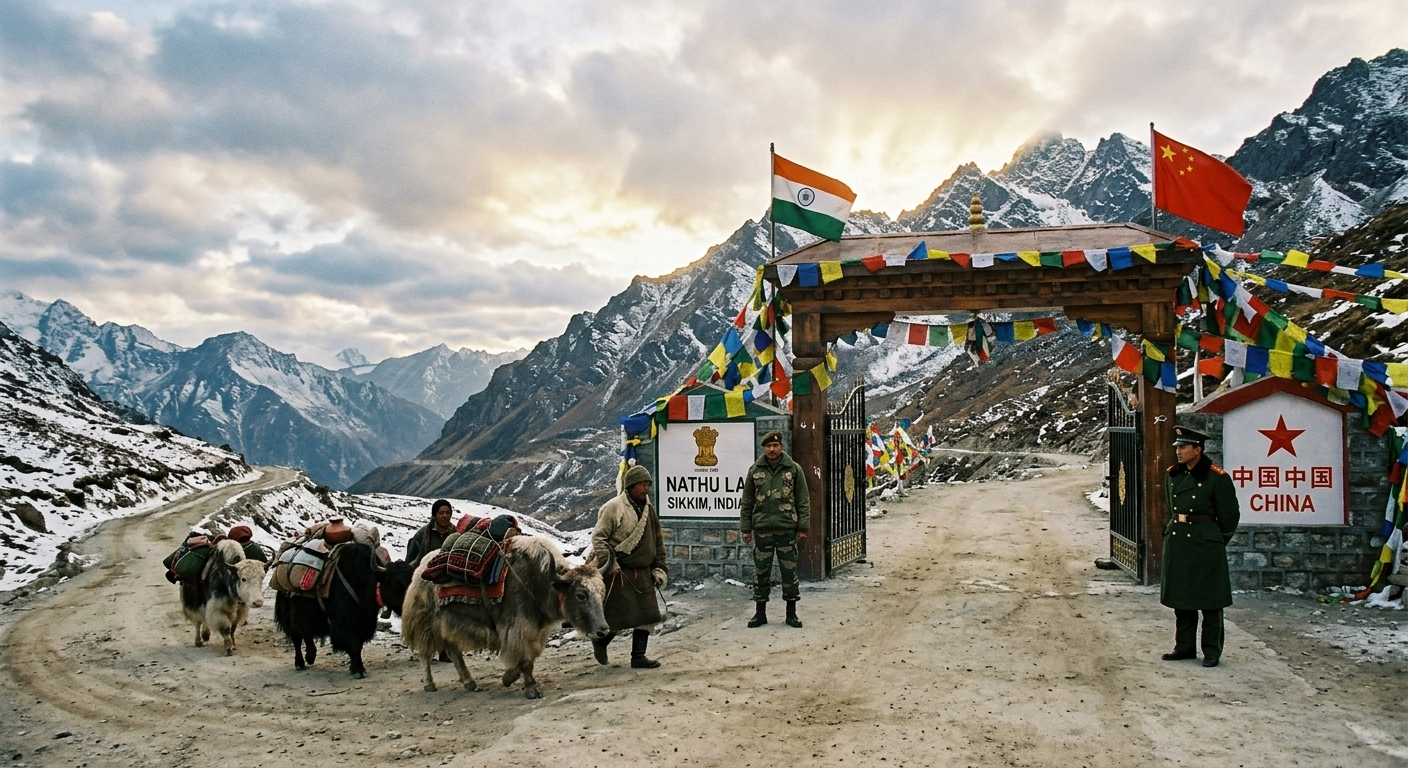
44 Years of Silence, Then Open for Business
On July 6, 2006, the Nathu La mountain pass connecting India and China quietly reopened for trade. It had been sealed since the Sino-Indian War in 1962 — 44 years of a perfectly good route sitting dormant, not because the road disappeared, but because the relationship around it had broken down.
Think about that for a second. The infrastructure was there the whole time. The geographic value never changed. What changed was the willingness to re-engage. In tech, we see this pattern constantly — a legacy system that everyone wrote off, an integration nobody wanted to revisit, a partnership that went cold after a bad launch. The temptation is to assume that because something got shelved, it's dead. But sometimes the timing just wasn't right, and the underlying value was waiting all along. The best engineers and tech leaders I've seen know how to look at a "closed pass" and ask why it's closed before assuming it should stay that way.
There's also something worth sitting with here about the long game. Nobody reopened Nathu La in a hurry — it took diplomacy, patience, and the maturity to separate old conflict from current opportunity. In a world of two-week sprints and quarterly targets, that kind of thinking feels almost radical. But some of the best infrastructure decisions, product pivots, and business relationships need exactly that kind of runway. Not every problem resolves in a sprint cycle. Sometimes the right move is staying at the table — or knowing when to come back to it after 44 years.