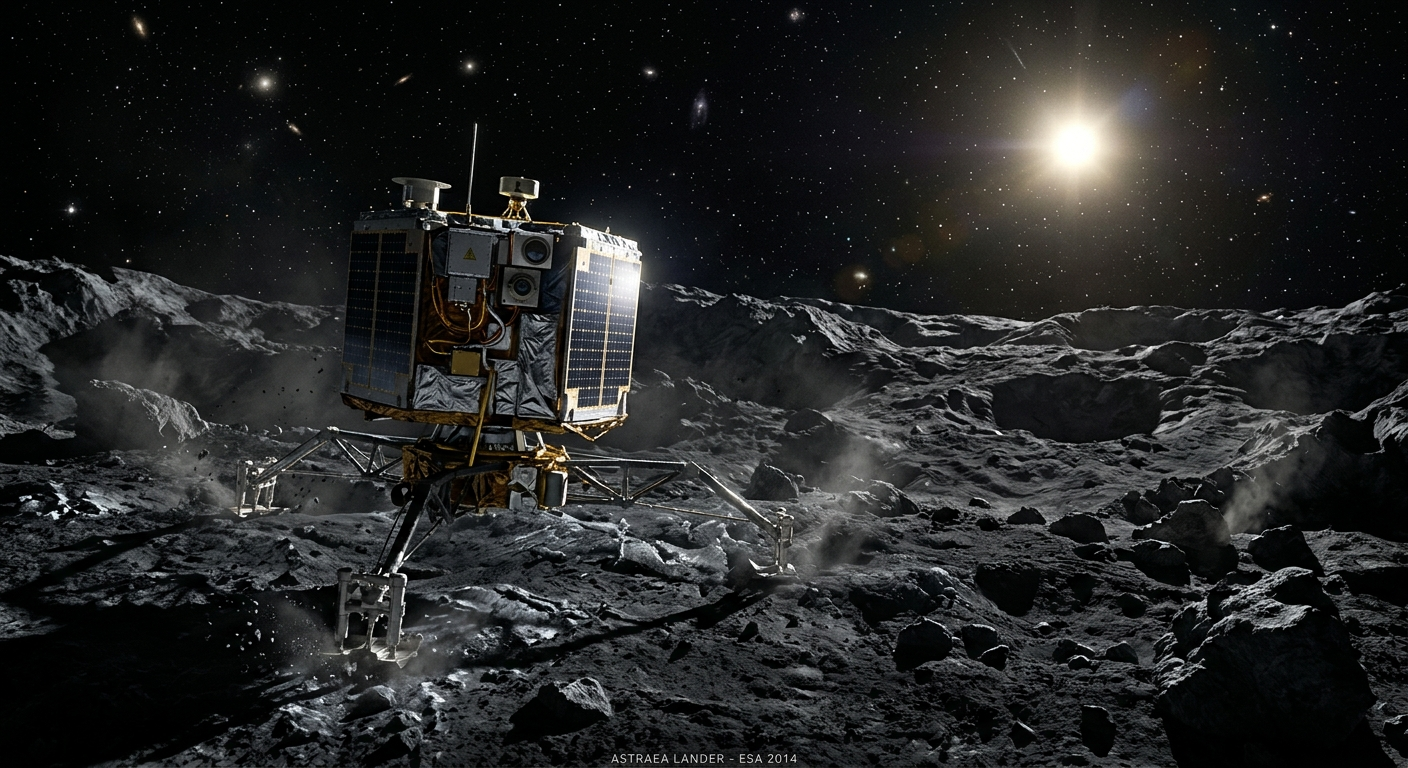
67 Million Miles to a Comet: What the Philae Lander Teaches Us About Ambitious Deployments
On November 12, 2014, the European Space Agency did something that still feels almost impossible to believe: they landed a washing-machine-sized robot called Philae on a comet traveling at 84,000 miles per hour through deep space. The Rosetta probe had been chasing Comet 67P/Churyumov–Gerasimenko for ten years before it got close enough to even attempt the landing. Ten years of planning, recalculating, and trusting the work. When Philae finally touched down — well, bounced down, twice, before settling into a shadowy crevice — mission controllers in Darmstadt, Germany erupted in tears and disbelief. It worked. Mostly. Imperfectly. Magnificently.
Here's what strikes me about that mission from a tech and business perspective: nobody at ESA waited until conditions were perfect. The comet's surface turned out to be unexpectedly hard and icy. The harpoons designed to anchor Philae didn't fire. The lander ended up tilted in a shadowed spot where its solar panels couldn't fully charge. By almost every technical measure, the deployment had complications — and yet it still returned extraordinary scientific data and made history. How often do we delay a product launch, a system migration, or a business pivot because we're waiting for a guaranteed clean landing? Philae is a pretty good argument that a bumpy touchdown still beats staying in orbit forever.
The other lesson here is about the power of a long-horizon commitment. The teams who built Rosetta started work in the 1990s. Many of the engineers who celebrated that landing in 2014 had spent a significant portion of their entire careers on this single mission. In an industry obsessed with quarterly results and two-week sprints, there's something worth pausing on there. Some of the best work — the infrastructure overhauls, the platform rebuilds, the cultural transformations inside a company — takes years of steady, unglamorous progress before the moment of contact. The comet isn't going to come to you. Sometimes you have to launch early, travel far, and trust the trajectory you calculated long ago.