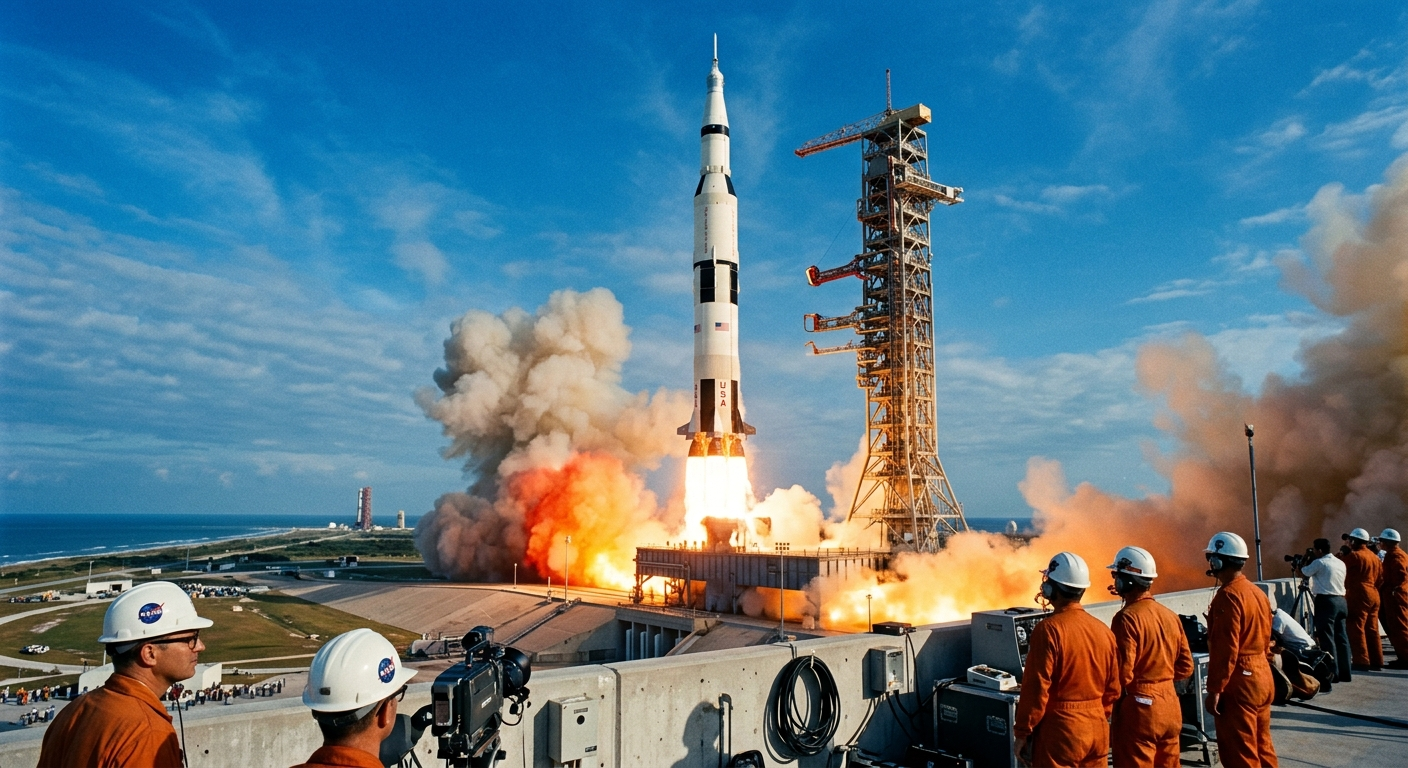
First Class to the Moon: What Apollo 15's Lunar Rover Teaches Us About Upgrading Mid-Mission
On July 26, 1971, NASA did something that sounds almost comically ambitious in hindsight: they strapped a car to a rocket and drove it to the Moon. Apollo 15 wasn't just another lunar mission — it was the first of what NASA called a "J-Mission," a fundamentally upgraded class of Apollo flight designed for deeper exploration and longer stays. And the centerpiece of that upgrade was the Lunar Roving Vehicle, a fold-up electric buggy that let astronauts Dave Scott and Jim Irwin cover nearly 28 kilometers of lunar terrain that would have been completely unreachable on foot. The program was already working. They changed it anyway.
That's the part that sticks with me as a tech consultant. There's a natural human tendency — especially on successful projects — to leave well enough alone. Apollo had already landed on the Moon four times. The pressure to not break what was working must have been enormous. But NASA looked at what they'd built, identified the constraint (mobility), and engineered a solution that transformed what the mission could accomplish. They didn't wait for a clean slate or a "Version 2.0" launch. They iterated on a live, high-stakes program. Sound familiar? That's exactly the conversation I have with clients who are nervous about upgrading legacy systems, refactoring working codebases, or introducing new tooling into a team that's already hitting its numbers.
The lesson isn't "always change things." The lesson is that knowing when you've hit your ceiling — and having the courage to redesign around that constraint — is what separates good teams from legendary ones. Apollo 15 returned more scientific data than all previous lunar missions combined, largely because of that rover. What's the rover your team hasn't built yet?