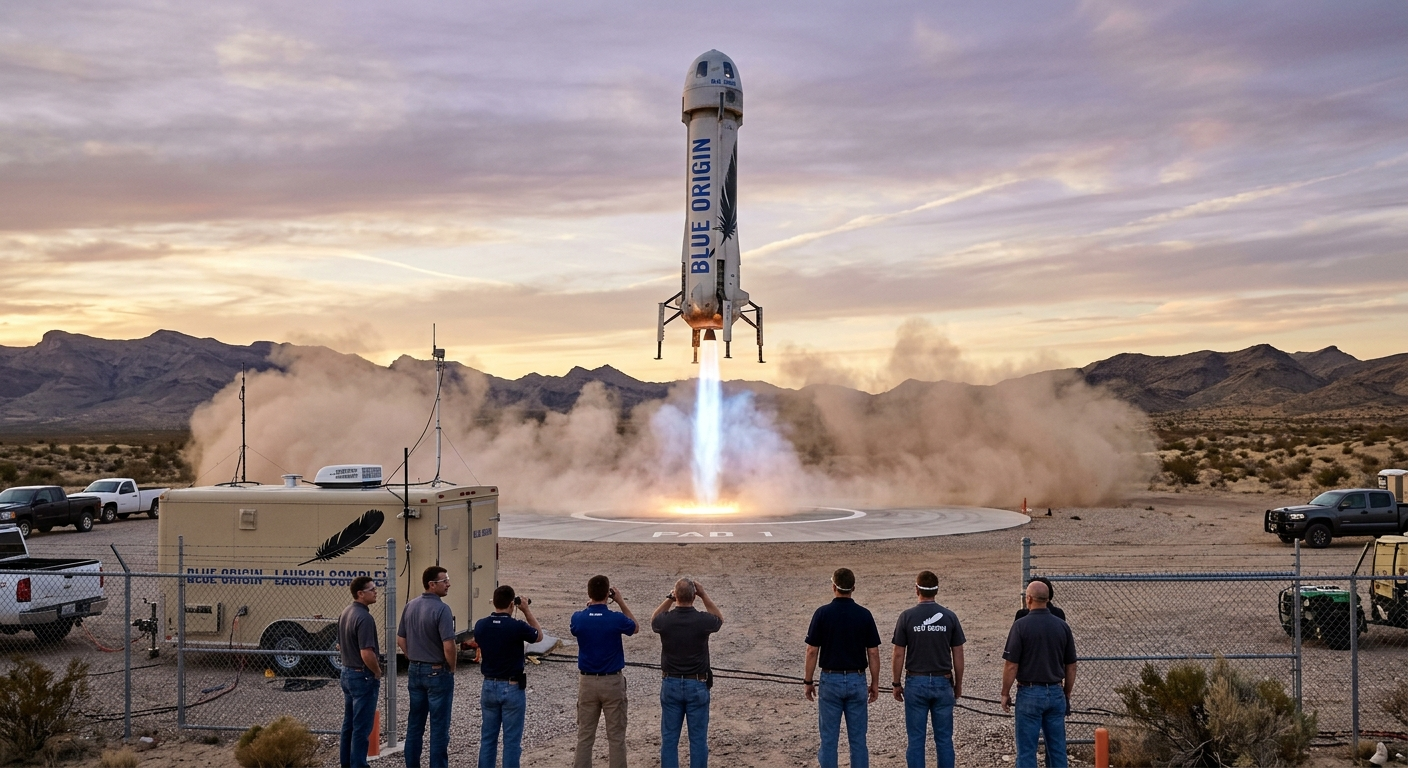
On November 23, 2015, a rocket called New Shepard, built by Blue Origin, did something that sounds almost boring until you think about it. It launched past the edge of space, roughly 100 kilometers up, then turned around and came back down. It landed upright on its own landing pad, under control, ready in principle to fly again. Before that day, rockets were essentially very expensive disposable products. You built one, used it once, and watched it fall into the ocean. Landing one softly was supposed to be the hard part, and it turned out to be possible.
What I love about this story is how familiar it feels if you've ever worked in software. The big breakthrough wasn't one flash of genius. It was the unglamorous work of sensors, feedback loops, throttle control, and repeated testing. Make a small adjustment, measure, correct, and do it again thousands of times per second. That's not far from how good teams ship products. You don't get a perfect plan up front. You build tight feedback loops and let reality tell you where you're wrong. And a lot of the real gains come from small corrections made continuously, not from one heroic push.
The other lesson is about reusability, which is really just a business idea. When you can reuse the expensive part, the economics change. In tech consulting, I think about this a lot: the documentation you write, the automation you build, the lessons you capture. If every project starts from scratch and ends in the ocean, you're burning money. So this week, ask what on your team is still disposable that could be reusable. Maybe it's a deployment script, a runbook, or a hard-won lesson. Build it so it can land, and fly again.