From Rivals to Rendezvous: What the 1975 Apollo-Soyuz Handshake Can Teach Us About Collaboration
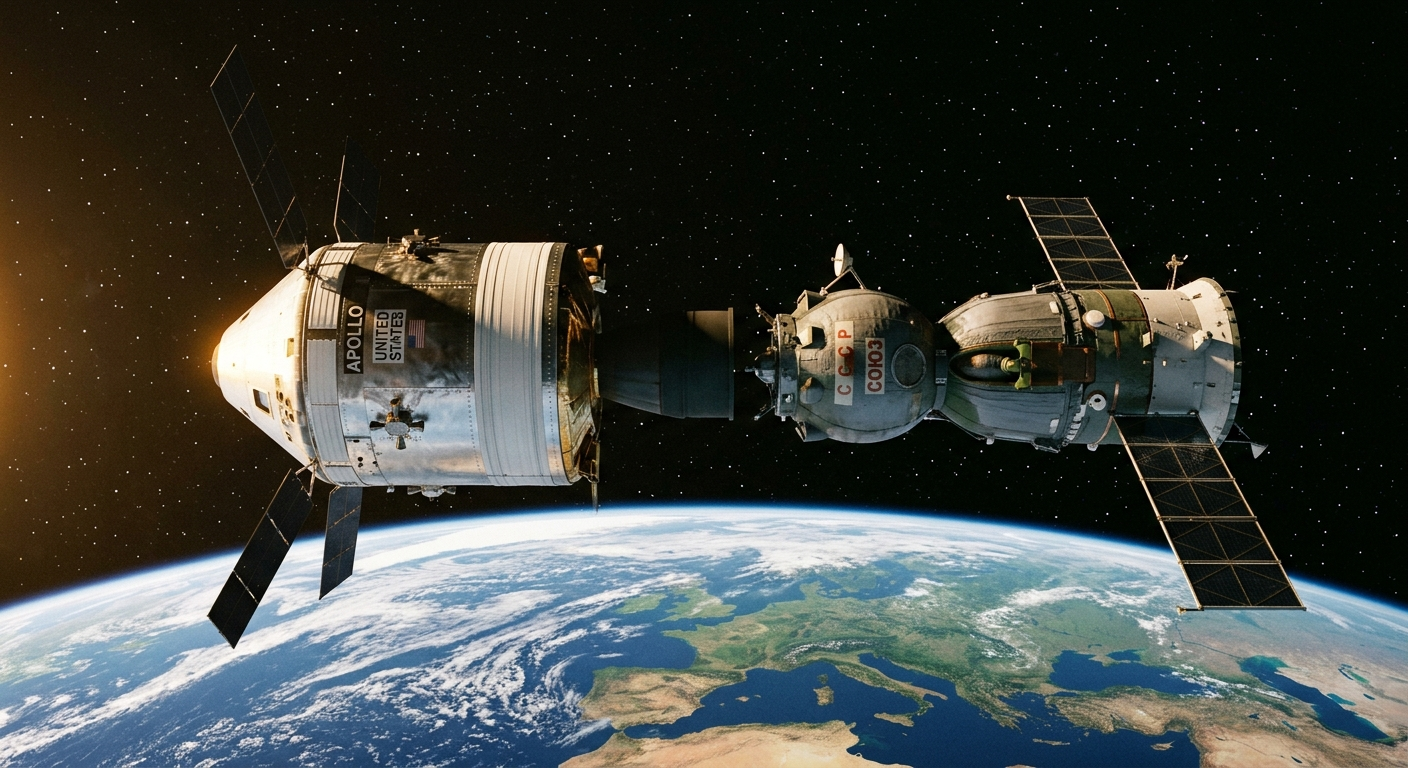
On July 15, 1975, two rockets launched from opposite sides of the planet — one from Florida, one from Kazakhstan — carrying astronauts and cosmonauts who had spent their entire careers on competing teams. The Apollo-Soyuz Test Project wasn't just a feel-good moment during the Cold War. It was a serious engineering challenge: two completely different spacecraft, built by two nations that barely trusted each other, had to physically connect 140 miles above Earth. To make it work, both teams had to agree on a common docking interface, share technical blueprints, and learn enough of each other's language to communicate in orbit. That's not soft diplomacy — that's hard-nosed systems integration.
There's a real lesson here for anyone leading a software project or managing a tech team. How many times have you seen two departments, two vendors, or two engineering philosophies locked in a cold war of their own — refusing to share documentation, building duplicate systems, or designing APIs that only talk to themselves? The Apollo-Soyuz mission succeeded because both sides decided the mission was bigger than the rivalry. They built an adapter. Literally. An actual docking module designed specifically to bridge two incompatible systems. Sound familiar? Sometimes the most valuable thing you can build isn't the rocket — it's the connector.
The other thing worth noting: this mission happened in 1975, right at the intersection of the Space Race winding down and the personal computing era gearing up. The world was about to change dramatically, and yet here were two old rivals figuring out how to work together instead of doubling down on competition. In tech and in business, the teams that win long-term are rarely the ones who build the highest walls. They're the ones who figure out how to dock with the ecosystem around them — open standards, integrations, partnerships, community. The handshake in orbit was just the beginning.