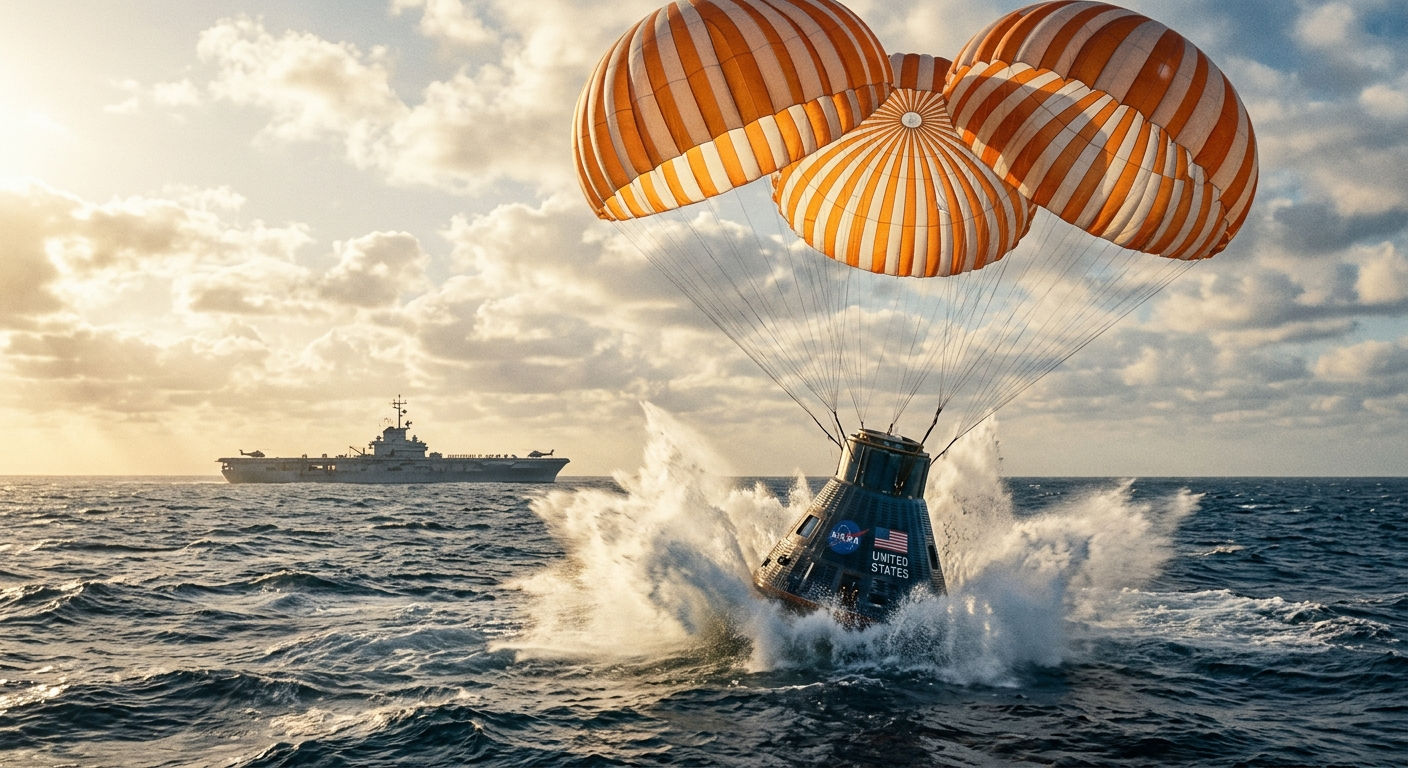
Houston, We Landed: What Apollo 11's Splashdown Teaches Us About Shipping
On July 24, 1969, a small conical capsule bobbed in the Pacific Ocean, and three humans inside it had just done something no one in history had ever done. But here's the thing people forget — the moon landing gets all the glory, but splashdown is what made it real. You don't win by launching. You win by coming home.
There's a version of every tech project that launches beautifully and then quietly disappears into the void. The demo that wows a room. The beta that never quite makes it to production. The roadmap that grows longer instead of shorter. Apollo 11 had 400,000 people supporting it, eight years of failed experiments behind it, and a president who'd staked the national reputation on it — and still the hardest discipline was executing the return. In software, we love the moon-shot moment. The harder, more important skill is the unglamorous work of closing the loop, deploying the thing, and calling it done.
So wherever you are in your project today — mid-build, mid-pivot, or staring at a launch checklist — ask yourself: are you optimizing for the launch, or for the splashdown? The Pacific was waiting in 1969. Your users are waiting right now.