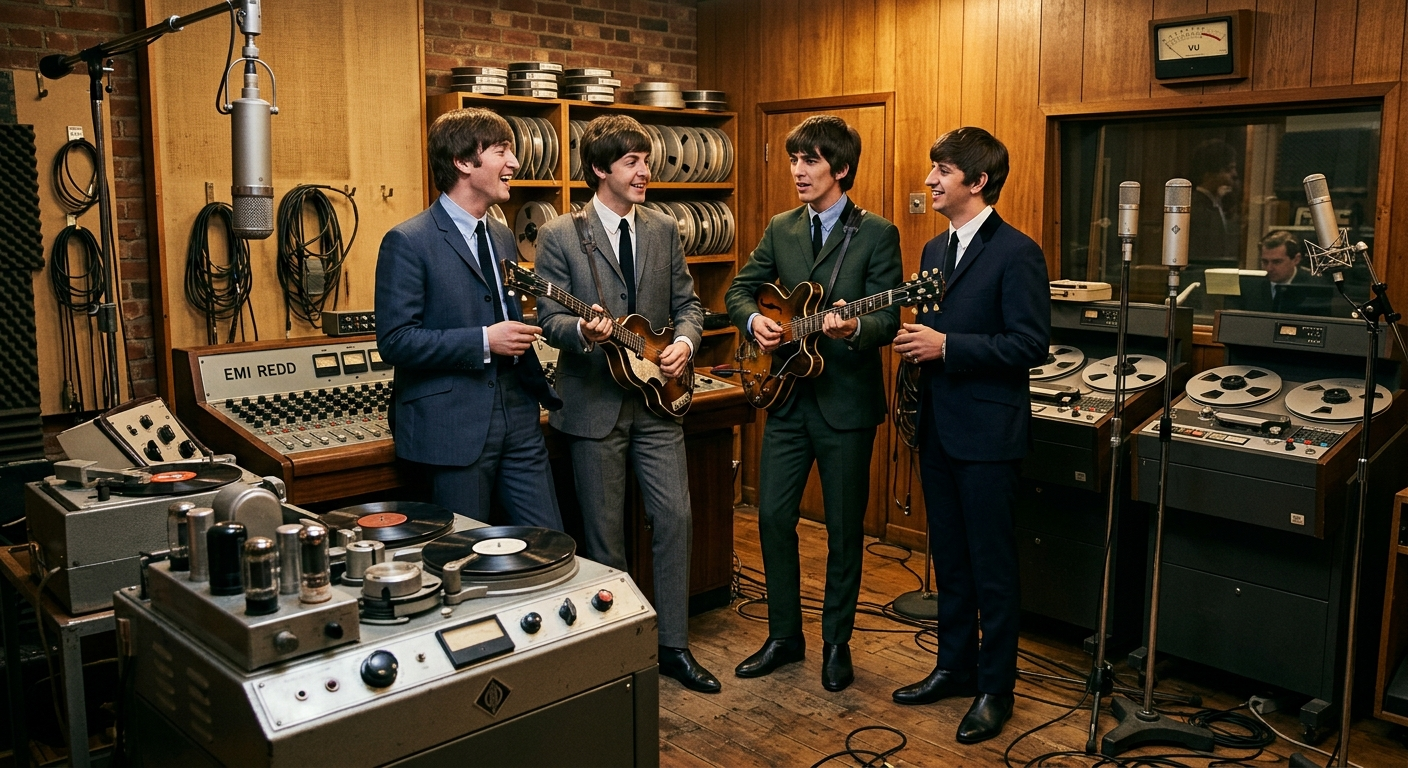
Love Me Do: What the Beatles' 1962 Debut Can Teach Us About Shipping Before You're Ready
On October 5, 1962, four young lads from Liverpool released their very first single. "Love Me Do" wasn't polished. It wasn't groundbreaking by the standards of what they'd eventually produce. EMI producer George Martin actually brought in a session drummer because he wasn't fully confident in their own. The harmonics were raw, the production was simple, and by the time Sgt. Pepper's rolled around just five years later, it would almost sound like a different band entirely. And yet — they shipped it. That decision changed music, culture, and frankly, the world.
There's a pattern here that shows up constantly in software and tech: the gap between "good enough to release" and "the version we really wanted to ship" can swallow your entire momentum if you let it. Teams spend months chasing a theoretical perfect product while the market moves, competitors iterate, and real user feedback stays locked outside the door. The Beatles didn't wait until they had a full orchestral arrangement and a concept album ready to go. They had a song, they had a studio window, and they took the shot. Version 1.0 doesn't have to be your masterpiece — it just has to exist.
As someone building or leading a tech product, the question worth sitting with today isn't is this ready? It's is this ready enough to learn from? The Beatles had 63 more singles after "Love Me Do." Every one of them was shaped by what came before. Your next sprint, your next product release, your next client pitch — it doesn't have to be Abbey Road. It just has to get out the door. Ship the thing. The refinement comes from doing, not from waiting.