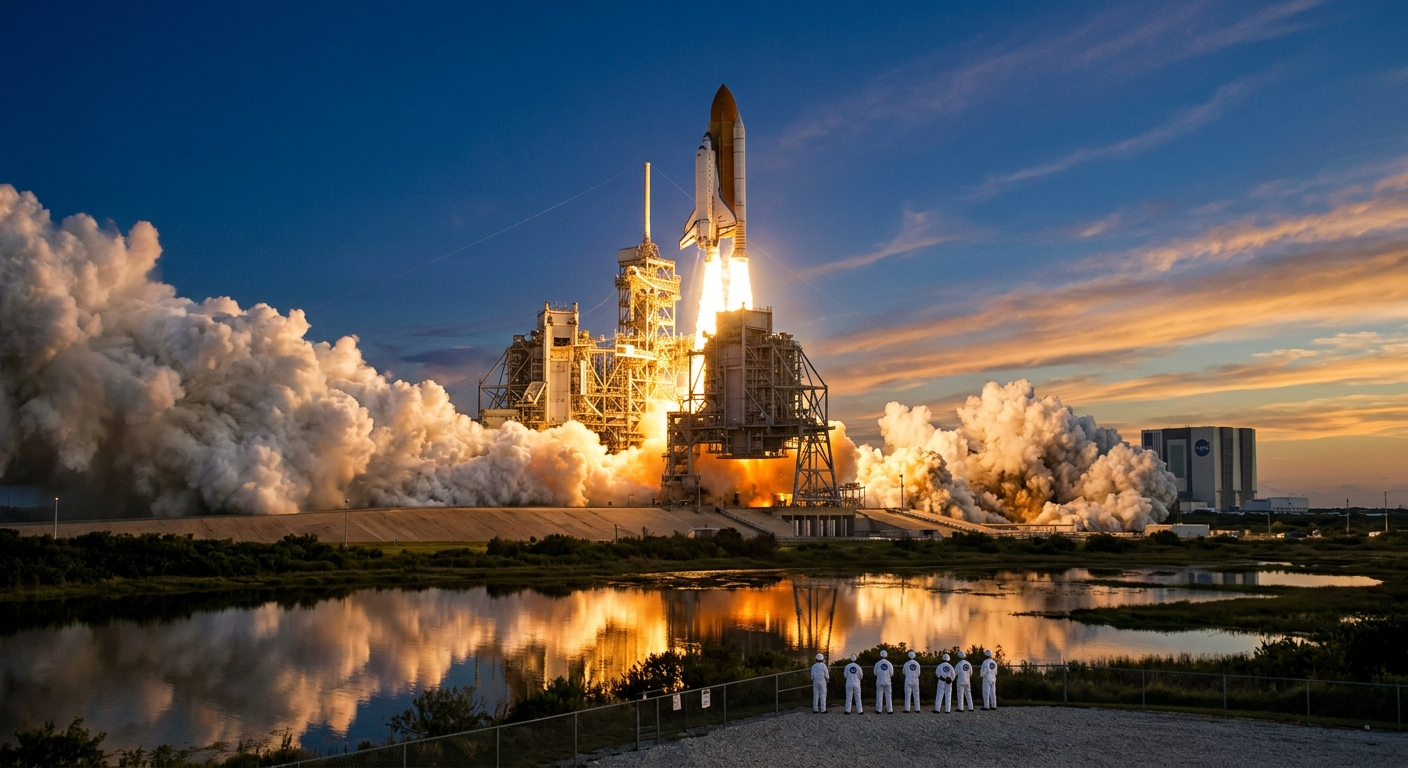
The 100th Shuttle Mission: Why Showing Up to the Launchpad Still Matters
On October 11, 2000, NASA launched STS-92 — the 100th Space Shuttle mission. Not the first. Not some dramatic moonshot. Just mission number one hundred, quietly stacking up on top of 99 others that came before it.
There's something worth pausing on there. Nobody remembers mission 100 the way they remember the first shuttle launch in 1981 or the heartbreak of Challenger. It didn't have the novelty of a debut or the weight of a tragedy. It was, in the best possible way, just another flight — representing years of engineers, technicians, and astronauts grinding through checklists, iterating on failures, and doing the work again. That's actually the most underrated story in any organization's history: the quiet accumulation of showing up. In tech, we celebrate the product launch, the funding round, the big pivot. We rarely celebrate mission 100 — the hundredth deployment, the hundredth client call, the hundredth sprint that nobody outside the team ever notices.
If you're building something right now that feels repetitive or unglamorous, consider that the 100th anything only exists because someone committed fully to missions 2 through 99. The breakthroughs — and there were real ones on STS-92, including delivering hardware for the International Space Station — happen inside the consistency, not despite it. Your systems, your processes, your team's trust in each other: those don't get built in a single dramatic moment. They get built launch by launch. So wherever you are in your own count, keep stacking numbers. Mission 100 is worth celebrating.