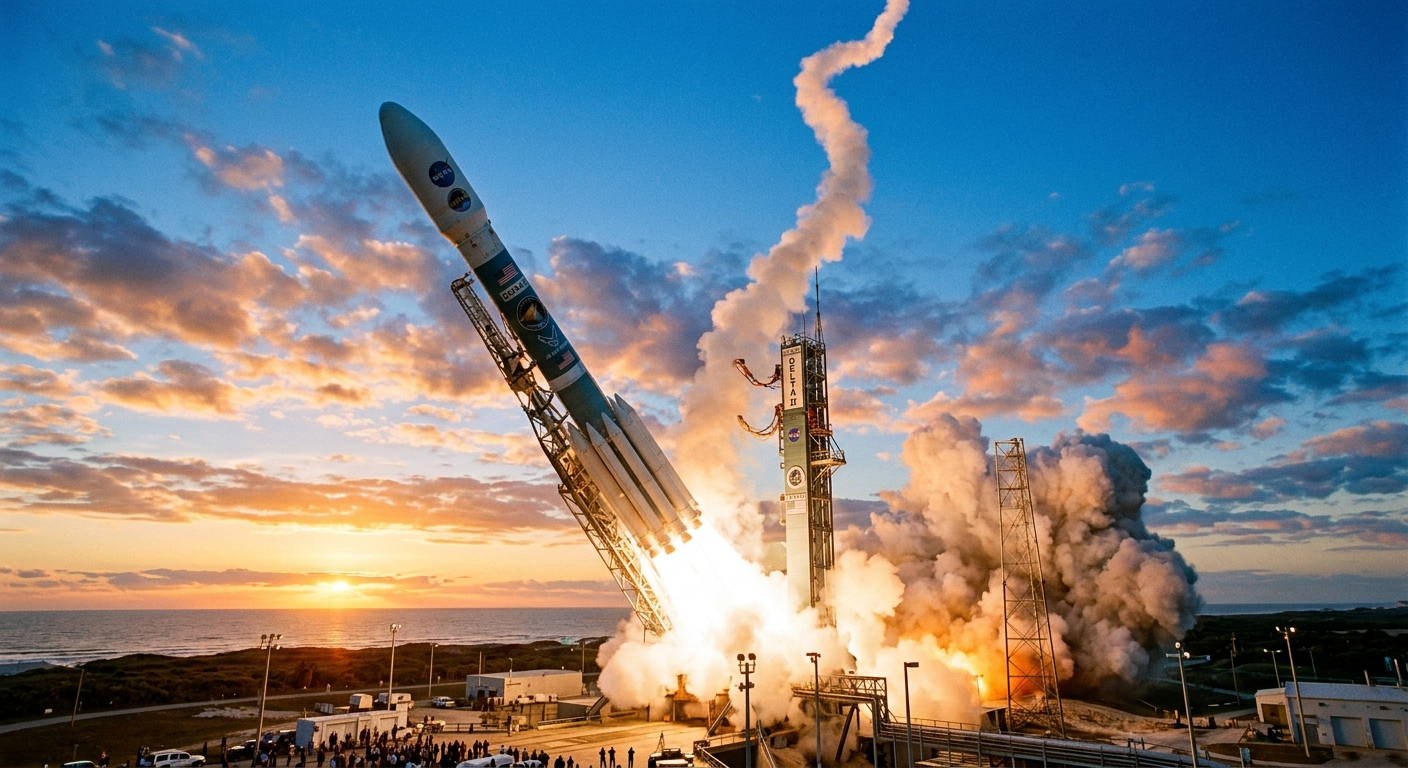
The Asteroid Belt Called — NASA Answered with Dawn in 2007
On September 27, 2007, NASA launched the Dawn space probe on a mission that most people didn't fully appreciate at the time. Its destination? The asteroid belt — specifically, the giant asteroid Vesta and the dwarf planet Ceres. What made Dawn genuinely remarkable wasn't just where it was going, it was how it planned to get there. Dawn relied on ion propulsion — a slow-burn technology that uses electrically charged particles instead of traditional chemical rockets. It would take years to reach its targets. There were no dramatic explosions of speed, no instant gratification. Just quiet, steady, relentless progress across hundreds of millions of miles.
That's a metaphor worth sitting with. In software development and tech leadership, we're constantly tempted by the flashy launch, the rapid sprint, the big-bang release. But some of the most important work — building a solid architecture, cultivating a team culture, paying down technical debt — runs on ion propulsion. It doesn't look impressive week-to-week. The metrics don't pop. And yet, years later, you find yourself orbiting something nobody else has ever reached. Dawn became the first spacecraft to orbit two extraterrestrial targets, a feat made possible entirely because of its quiet, efficient engine.
If you're leading a tech team or building a product right now, there's probably something on your roadmap that feels slow and unglamorous. Maybe it's documentation, refactoring legacy systems, or training your people. Don't mistake the lack of spectacle for lack of progress. Dawn traveled over 4.9 billion miles on an engine that produces about the same thrust as a piece of paper resting on your hand. The mission was declared a complete success. Sometimes the most powerful thing you can do is simply keep accelerating — even when no one's watching.