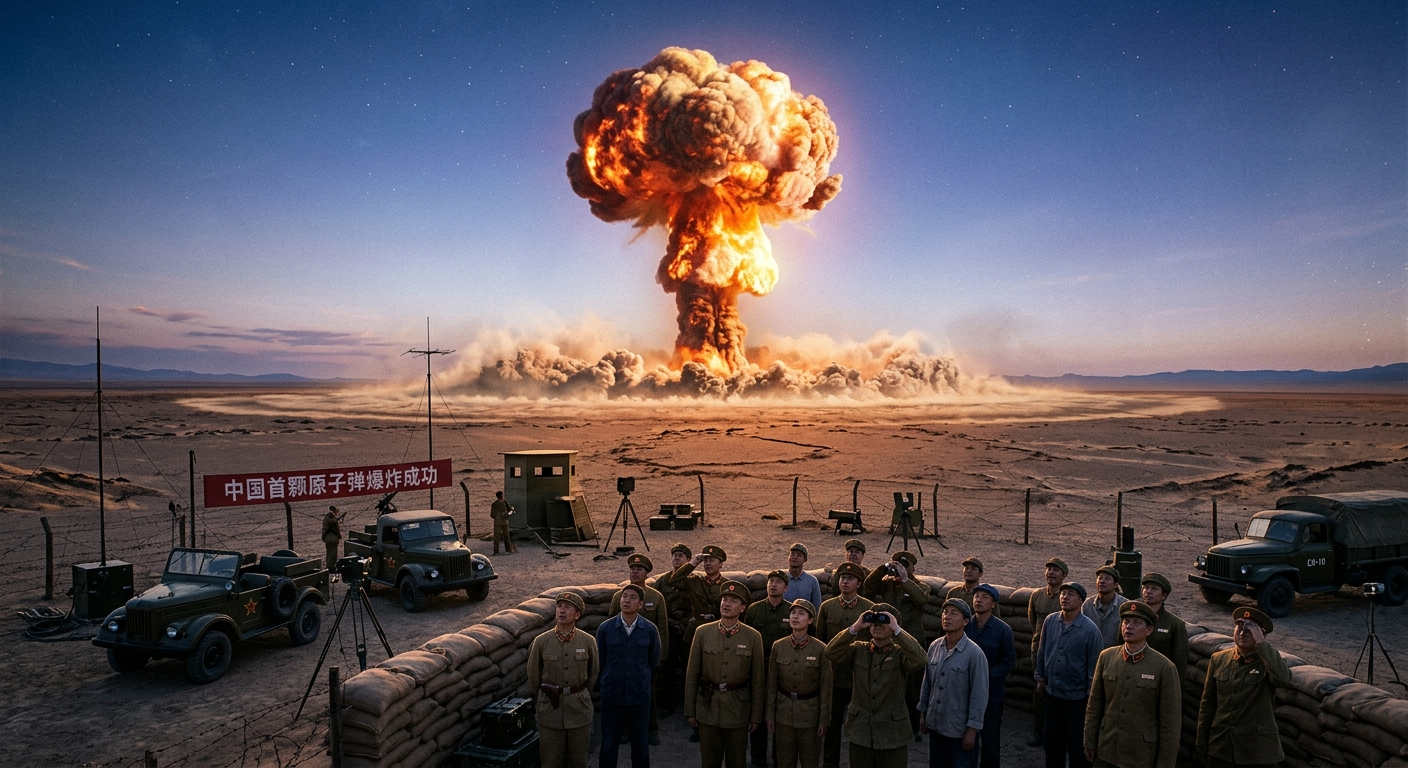
The Day China Split the Atom — And What It Teaches Us About Bold Bets
On October 16, 1964, the Lop Nur desert in western China shook with the force of China's first successful nuclear detonation — code-named "596." At the time, the Western world largely didn't see it coming. China was considered too resource-strapped, too isolated after the Soviet Union withdrew its technical assistance in 1960, and too far behind to pull it off. They did it anyway, in just under a decade, with a team that had to rebuild its entire knowledge base largely from scratch.
There's something worth sitting with there. When the Soviets walked out, they took their blueprints, their advisors, and their equipment with them. What they couldn't take was the commitment to the goal. The Chinese scientific program didn't fold — it adapted. It found other paths, leaned into domestic talent, and kept moving. In the software world, we see this dynamic play out constantly: a key vendor drops support, a platform changes its API overnight, a senior engineer takes a competing offer two weeks before launch. The project doesn't have to die. The teams that thrive are the ones who treat disruption as a design constraint, not a death sentence.
The broader lesson for anyone building something ambitious — a product, a team, a company — is that capability gaps are temporary; commitment gaps are permanent. China's 596 project wasn't magic. It was prioritization under pressure, with high stakes and no safety net. The next time your tech stack feels behind, your team feels under-resourced, or the scope feels impossible, remember that a group of scientists in a desert once rebuilt a nuclear program from zero and crossed the finish line. You've got this.