Doing It Twice Is Harder Than Doing It First
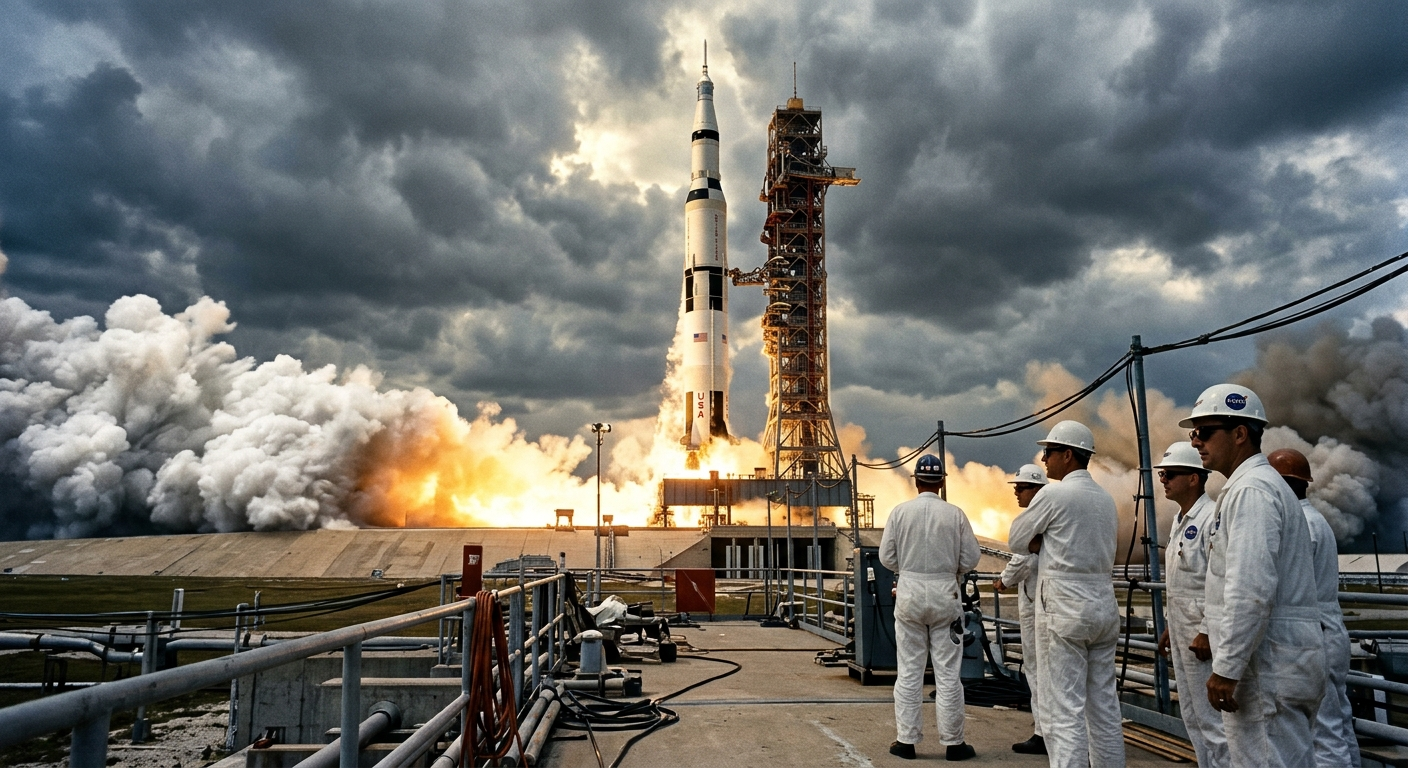
On November 14, 1969, Apollo 12 lifted off from Kennedy Space Center in a thunderstorm — actually getting struck by lightning twice during launch — and kept going anyway. It became humanity's second successful crewed Moon landing, touching down in the Ocean of Storms just four months after Apollo 11. Here's the thing nobody talks about: the second mission is always harder to care about. Apollo 11 had the glory. Apollo 12 had to prove something quieter and more important — that it wasn't a miracle. It was a process.
That's a challenge every dev team and tech organization eventually faces. Version 1.0 ships, the champagne gets popped, and then someone asks, "okay, can we do it again? Better? Consistently?" Building something that works once is exciting. Building a repeatable system that works under pressure — even when lightning is literally hitting your rocket — that's engineering maturity. The Apollo 12 crew didn't abort when the instruments went haywire after the lightning strike. A 24-year-old flight controller named John Aaron recognized the obscure instrument signature and called out "Flight, try SCE to Aux" — a switch setting so rarely used that only the commander knew what it meant. One person's deep, specific knowledge saved the mission.
That detail should resonate with anyone building a tech team. You want people who know the weird edge cases, who've read the documentation nobody else reads, who stay curious about the systems under the systems. Apollo 12 is a reminder that repeatability isn't boring — it's the whole game. The first success proves it's possible. The second one proves you can do it.