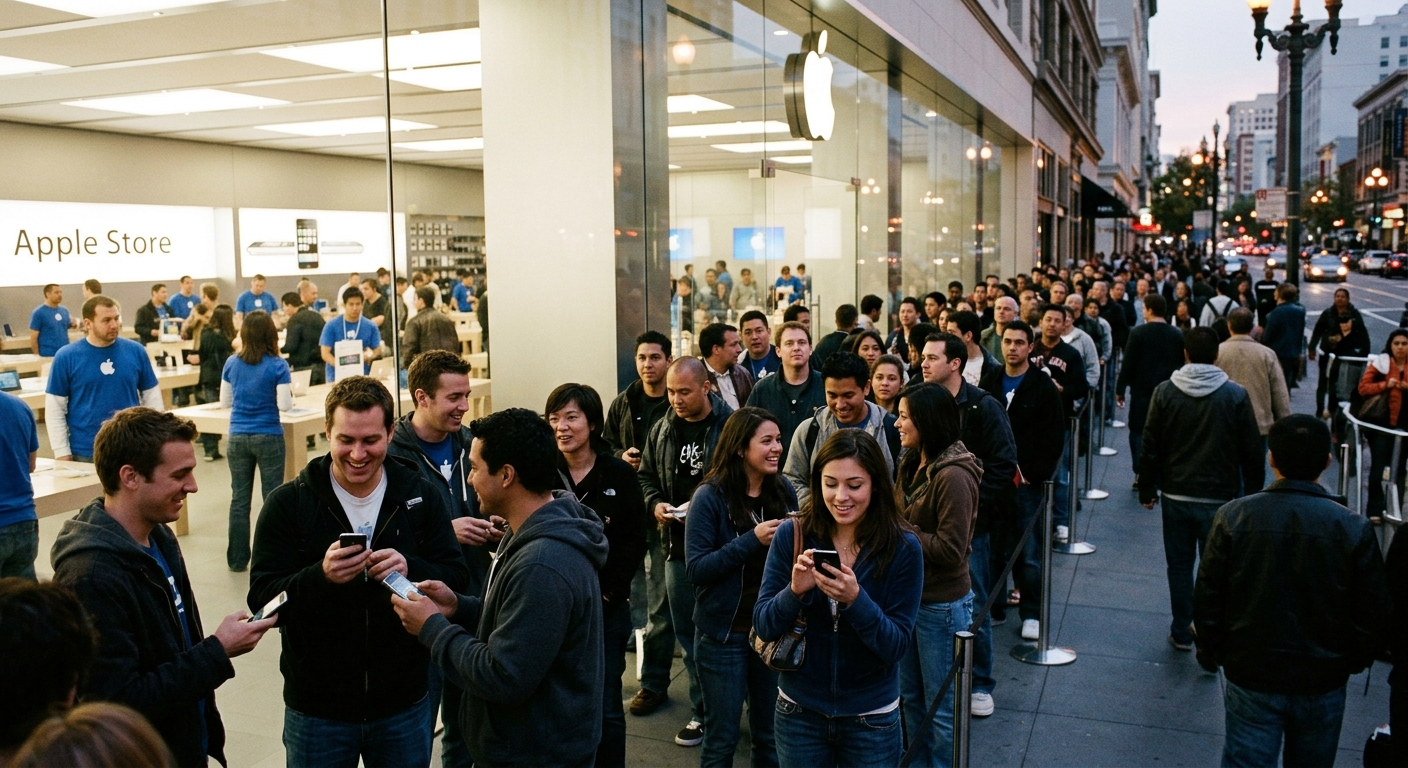
The Day the World Fit in Your Pocket
On June 29, 2007, Apple released the first iPhone — and nothing in tech has been quite the same since. No physical keyboard. No stylus. Just a glass slab and the audacious idea that software could replace hardware, and that simplicity was actually the harder thing to build. Most people who stood in those lines didn't fully understand what they were holding. They just knew they had to have it.
Here's what's worth thinking about: the iPhone wasn't the first smartphone. BlackBerry, Nokia, and Palm were already in the game. Apple won not because they invented the category, but because they reimagined what the experience should feel like. Steve Jobs reportedly said they were five years ahead of everyone else — but the real lead wasn't in the chip specs. It was in the relentless focus on the user's perspective. That's a principle that applies whether you're building an enterprise SaaS platform, a client portal, or an internal tool that your team uses every day. The question isn't just "does it work?" It's "does it feel right?"
Seventeen years later, the iPhone's legacy isn't just a product — it's a mindset shift. It proved that a bold, opinionated design decision (touch-only, no stylus, no physical keyboard) could look like a liability right up until it looks like genius. In consulting and software development, we face those judgment calls constantly. Sometimes the best thing you can do for a client is simplify, cut, and trust the user enough to get out of their way. The teams that build things people genuinely love aren't always the ones with the biggest budgets — they're the ones willing to ask harder questions about what actually matters.