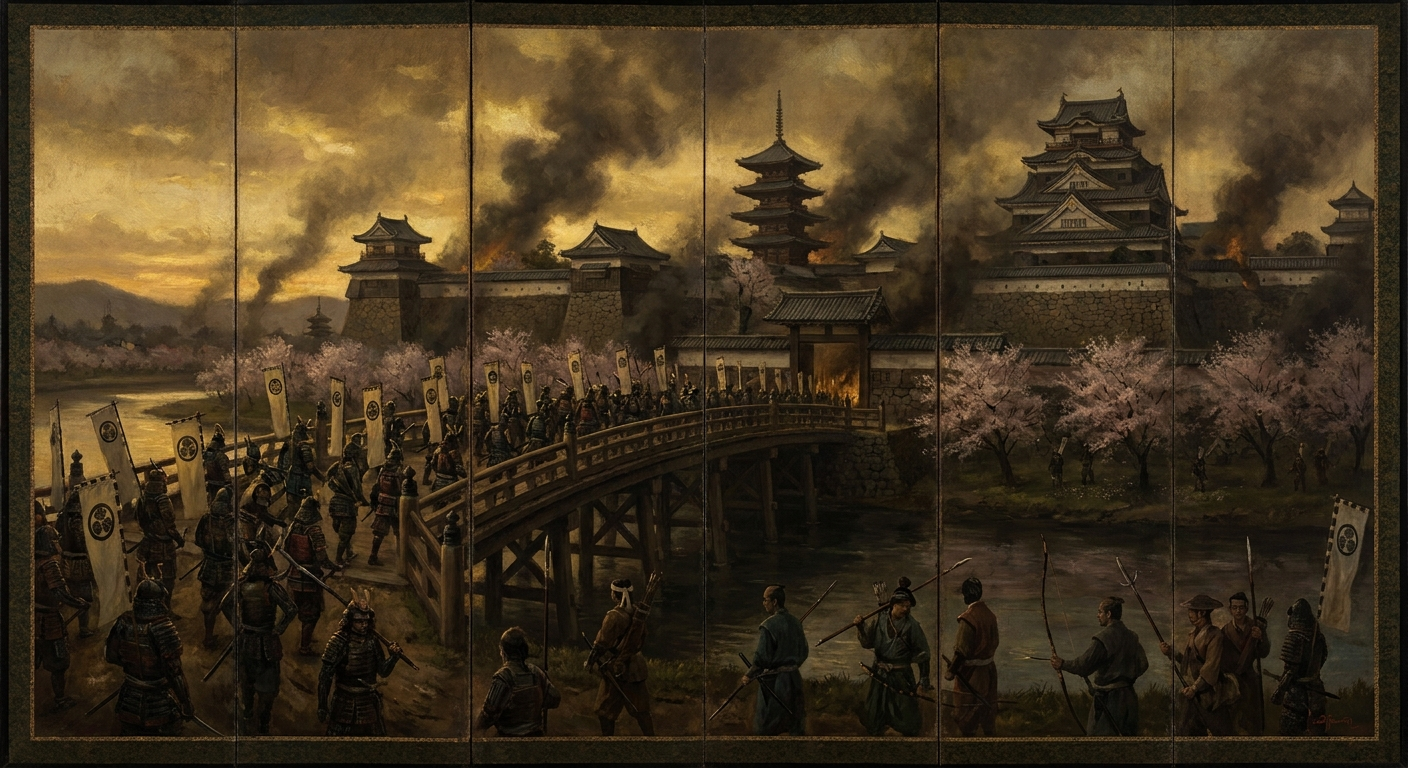
On June 4, 1615, Tokugawa Ieyasu's forces finally took Osaka Castle, ending the last major resistance to his rule. But this wasn't just another military victory—it was the moment that locked in a platform that would dominate Japan for the next 250 years. The Tokugawa shogunate became one of history's most stable operating systems, and there's a lot we can learn from how they built it.
What's fascinating is that Tokugawa didn't just win through brute force. He spent years building alliances, establishing standards, and creating systems that made his platform the obvious choice for other feudal lords. Sound familiar? The best tech platforms don't succeed by being marginally better—they win by making themselves indispensable to an entire ecosystem. Just like how Tokugawa created economic incentives and governance structures that made opposing him nearly impossible, successful platforms today create value networks where everyone benefits from staying in the system.
The real genius was in the long-term thinking. While his rivals focused on immediate gains and tactical victories, Tokugawa was building institutional frameworks designed to last generations. In our world of quarterly earnings and sprint cycles, there's something powerful about that kind of architectural patience. The next time you're designing a system or leading a team, ask yourself: am I just solving today's problem, or am I building the foundation for the next decade? Sometimes the most important victory isn't the flashy feature launch—it's the boring infrastructure work that makes everything else possible.
Note: Historical details may vary by source.