The Ground Shifted, But the Game Went On
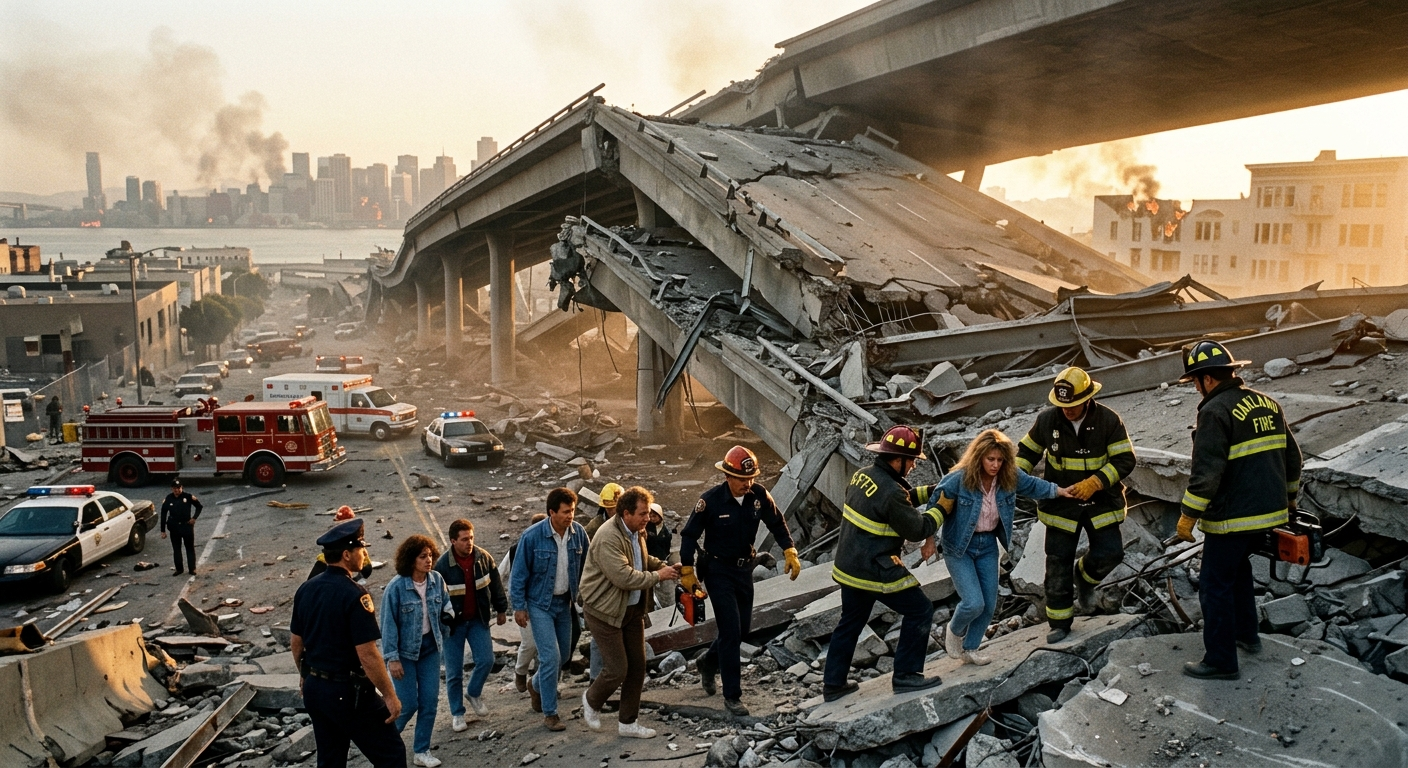
On October 17, 1989, at 5:04 PM local time, the San Francisco Bay Area was getting ready for Game 3 of the World Series. Millions of fans were glued to their TVs, Candlestick Park was packed, and then — the ground moved. A 6.9 magnitude earthquake, later named Loma Prieta, rocked the region for 15 terrifying seconds. Sixty-three people lost their lives, freeways collapsed, and parts of the Bay Bridge buckled. And yet, within 10 days, the World Series resumed. The region didn't wait for perfect conditions. It assessed the damage, prioritized what mattered, and kept moving.
There's something in that story that every software team and tech leader should sit with. We build systems assuming a certain baseline — stable infrastructure, predictable load, cooperative dependencies. And then the ground shifts. A cloud provider goes down. A key team member leaves. A client changes scope mid-sprint. The Loma Prieta earthquake is a brutal but honest reminder that resilience isn't about preventing failure; it's about how fast and how clearly you respond when failure arrives uninvited. The engineers who inspected that damage in 1989 didn't have the luxury of a staging environment. They had to triage in real time, under pressure, with incomplete information — sound familiar?
What separates good tech teams from great ones isn't the absence of incidents. It's the culture they've built before the incident happens. Do your team members know their roles when things break at 2 AM? Do your systems fail gracefully, or do they cascade? The Bay Area rebuilt. The bridge reopened. The game was played. Build your systems — and your teams — like they're going to get tested, because eventually, they will be.