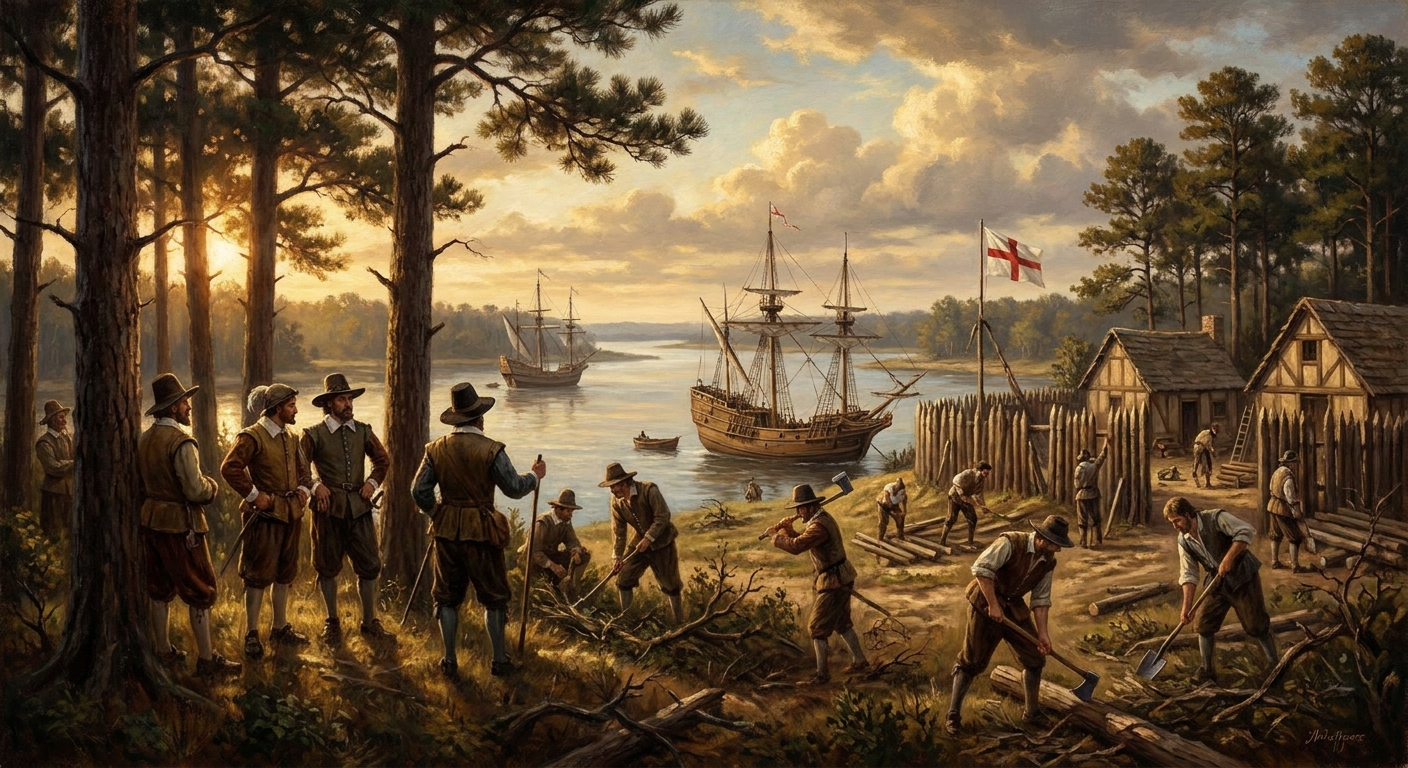
On May 24, 1607, English colonists officially established Jamestown in Virginia—the first permanent English settlement in North America. What many don't realize is just how close this "permanent" settlement came to complete failure. Within months, disease, starvation, and conflict had decimated the population. By the winter of 1609-1610, known as the "Starving Time," only 60 of the original 500 colonists remained alive. Yet they persisted, and that persistence literally changed the world.
As someone who's watched countless startups and tech projects, I'm struck by how much Jamestown's story mirrors what we see in software development today. Those colonists were essentially running the ultimate MVP—minimum viable settlement—in completely uncharted territory. They had no user manual for surviving in Virginia, no Stack Overflow for colonial agriculture, and definitely no venture capital to fall back on when things got tough. What they had was commitment to the long-term vision, even when the short-term metrics looked absolutely terrible.
The parallel to building lasting technology is uncanny. Every successful platform, every groundbreaking app, every innovative SaaS product goes through its own "Starving Time." That's when user adoption is slower than projected, when technical debt feels overwhelming, when the team questions whether the whole thing is worth it. The companies that become permanent fixtures in our digital landscape aren't necessarily the ones with the best initial conditions—they're the ones that commit to working through the inevitable rough patches. Jamestown's 400+ year legacy started with a group of people who decided that temporary failure wasn't permanent defeat.
Note: Historical details may vary by source.