The Man Who Jumped From Space (And What He Knew That We Don't)
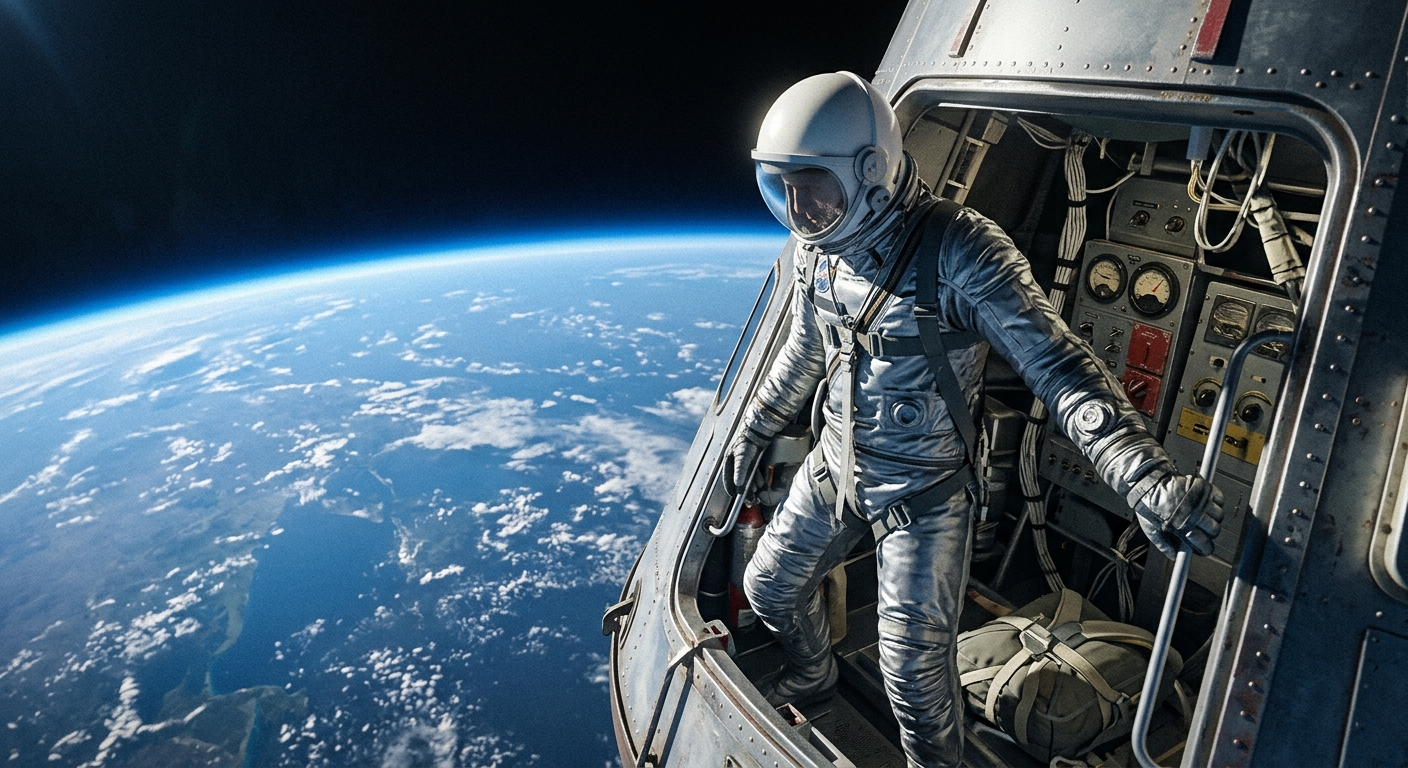
On August 16, 1960, U.S. Air Force Captain Joseph Kittinger climbed inside a tiny open gondola attached to a helium balloon, rode it up to 102,800 feet above New Mexico, and then stepped off the edge. He reached speeds approaching 614 mph in freefall, set records for the highest jump, the longest freefall, and the highest speed by a human outside a vehicle — and those records stood untouched for 52 years. Not a decade. Fifty-two years. The thing that gets me every time I think about this: nobody was sure it was going to work. The equipment was experimental, the physics at that altitude were barely understood, and one of his gloves partially depressurized on the way up, leaving his hand swollen and numb. He jumped anyway.
There's something that really resonates here for anyone building software, running a team, or making a big business call. Kittinger didn't jump because he had certainty — he jumped because he had done the preparation, understood the risk, and decided the mission was worth it. That's a very different thing from recklessness. In tech, we talk endlessly about "failing fast" and "taking bold swings," but a lot of times those phrases get used to paper over the absence of real preparation. Kittinger's leap was audacious and deeply engineered. The courage and the rigor weren't opposites — they were partners.
The other thing worth noting: his records held for over half a century. When Felix Baumgartner finally broke them in 2012, he didn't dismiss Kittinger's work — he brought him on as a capsule communicator and mentor. The guy whose record was being broken helped coach the person breaking it. That's the kind of long-game thinking that builds legacies in any industry. Build something solid enough that it shapes the next generation, and be generous enough to help them surpass you. Not a bad blueprint for a Tuesday.