When the Computer Says One Thing and Your Instincts Say Another
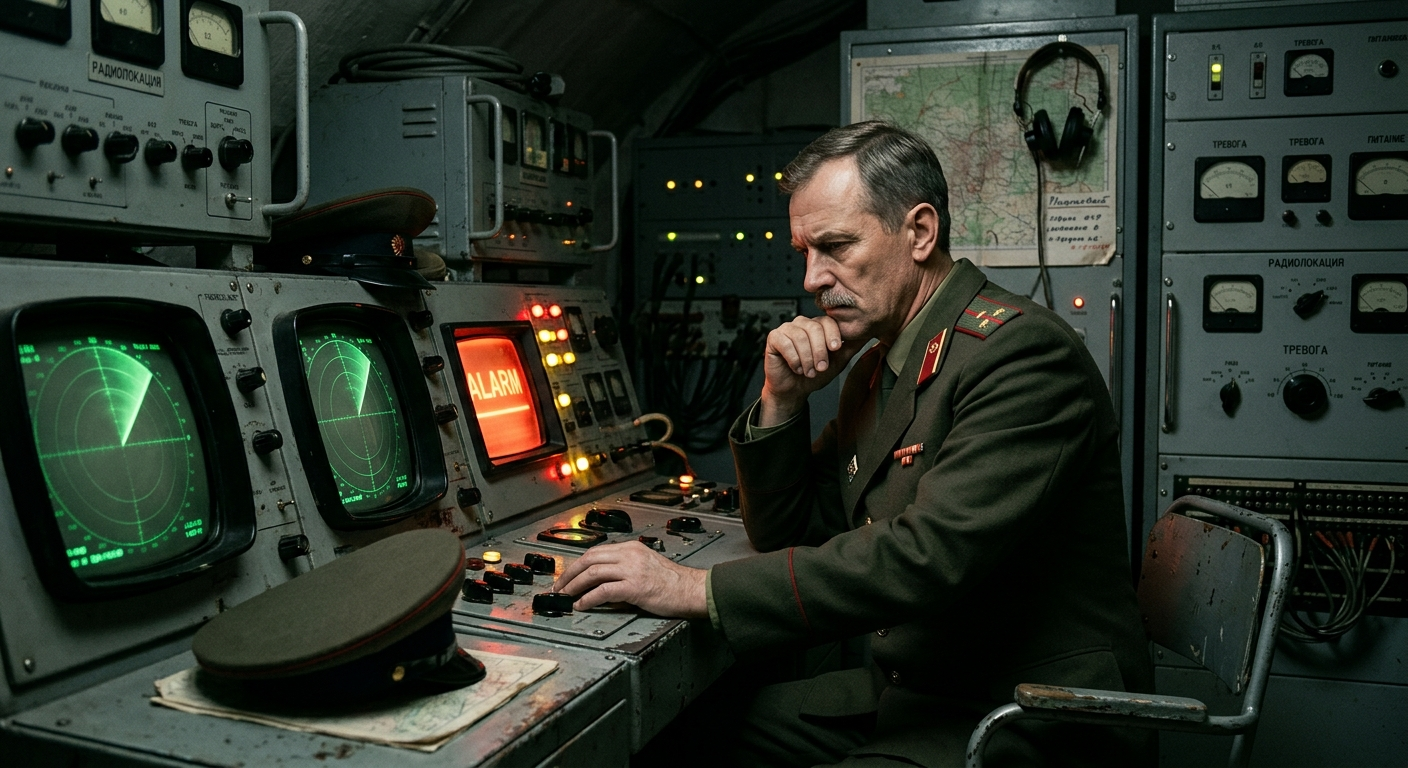
On September 26, 1983, Soviet Air Force officer Stanislav Petrov was on duty at a nuclear early-warning facility outside Moscow when the system lit up with every alarm imaginable. The computer was reporting an incoming American nuclear missile strike — then another, then another. Five missiles total. Protocol was clear: report it up the chain, and the Soviet response would almost certainly be swift and catastrophic. But Petrov paused. Something felt off. A real first strike wouldn't be five missiles. He labeled it a system malfunction and did not report it as an attack. He was right. A rare alignment of sunlight on high-altitude clouds had fooled the satellite sensors. His judgment call — made under unimaginable pressure in under a few minutes — may genuinely be the reason you're reading this right now.
Here's what's wild about this story from a tech perspective: Petrov didn't distrust technology. He understood it well enough to recognize when it was failing. That's a completely different skill set. We talk a lot in software development about trusting the data, letting the metrics guide decisions, and building systems we can rely on. All of that is right. But the most dangerous place to be is in a room full of smart people who've outsourced their critical thinking entirely to a dashboard. Monitoring tools give false positives. Automated alerts get misconfigured. AI models confidently output nonsense. The tool is only as trustworthy as your ability to interrogate it.
The real takeaway for anyone leading a tech team or building software products isn't "don't trust your systems" — it's "know your systems well enough to know when they're lying to you." Petrov's training and deep familiarity with the technology is what gave him the confidence to override it. That same principle applies whether you're looking at an anomaly in your production logs, a surprisingly rosy sales forecast from your CRM, or a security alert that just doesn't quite add up. Build good systems, yes. But also build the kind of team that stays sharp enough to question them. That combination — solid tooling plus human judgment — is what actually keeps things from blowing up.