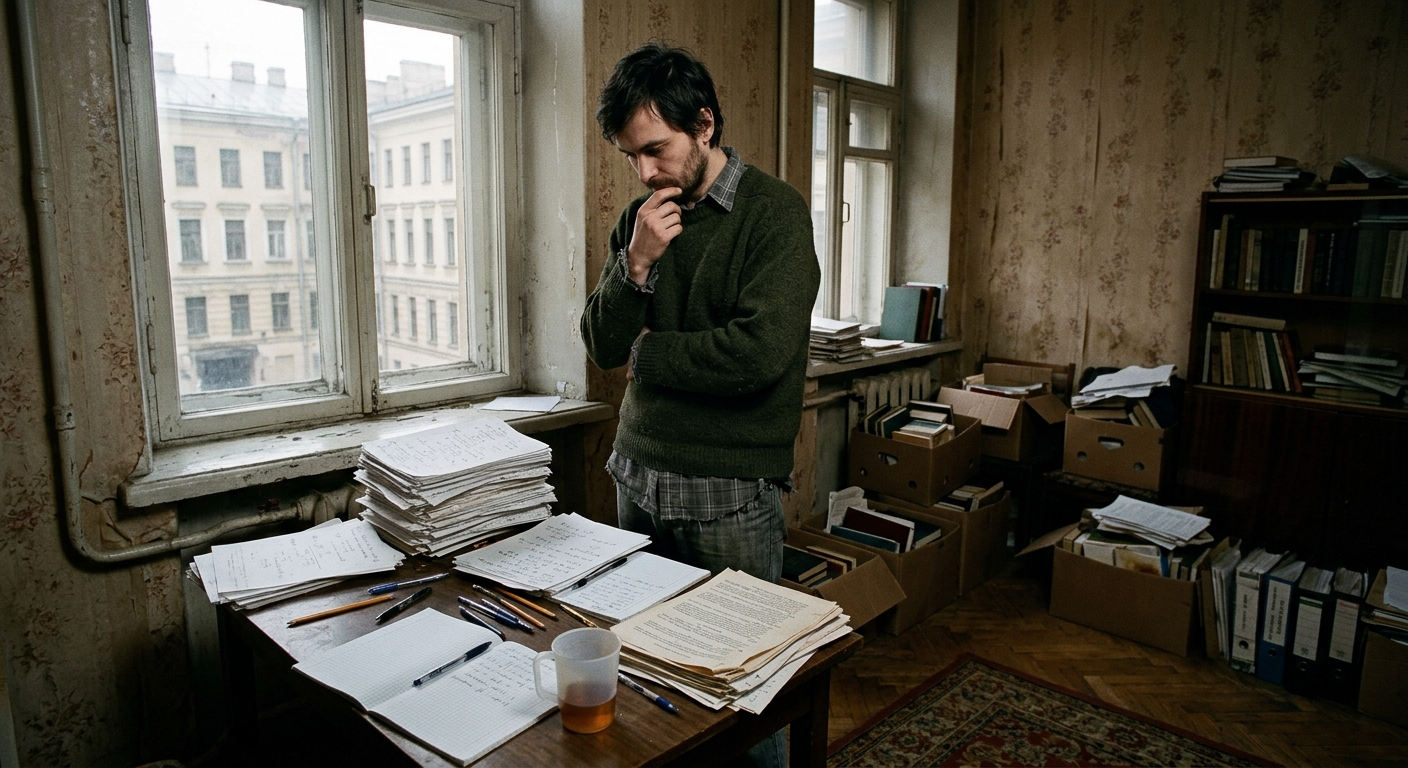
The Mathematician Who Said "No Thanks" to the Nobel Prize of Math
On August 22, 2006, the mathematical world watched something genuinely bizarre unfold. Grigori Perelman — a quiet, reclusive Russian mathematician — was awarded the Fields Medal, the highest honor in mathematics, for solving the Poincaré conjecture. This wasn't some dusty academic puzzle. It was a problem that had stumped the world's brightest minds for over a hundred years, and it came with a $1 million Millennium Prize attached. Perelman turned down both. No medal. No money. No press conference. He reportedly said the recognition wasn't necessary because "the decision was mine to make."
Here's what makes that worth thinking about: Perelman didn't solve the Poincaré conjecture for the award. He solved it because the problem was real and it mattered to him. In tech, we talk a lot about shipping features, hitting metrics, and chasing industry recognition — and those things aren't wrong to care about. But some of the most durable, important work gets done by people who are genuinely obsessed with the problem itself, not the trophy at the end. The best engineers and architects I've seen do their finest work when the puzzle has its hooks in them, not when the performance review is coming up.
Now, I'm not saying you should turn down raises or ignore your clients (please don't do that). But Perelman's story is a useful gut-check. When you're evaluating a project, a product decision, or even a career move — ask yourself honestly: am I drawn to the actual problem here, or just the optics of solving it? The work that holds up over time, the solutions that actually move the needle for your business, almost always come from that first place. The math doesn't care about your reputation. Neither does the code.