The Night a Private Rocket Changed Everything
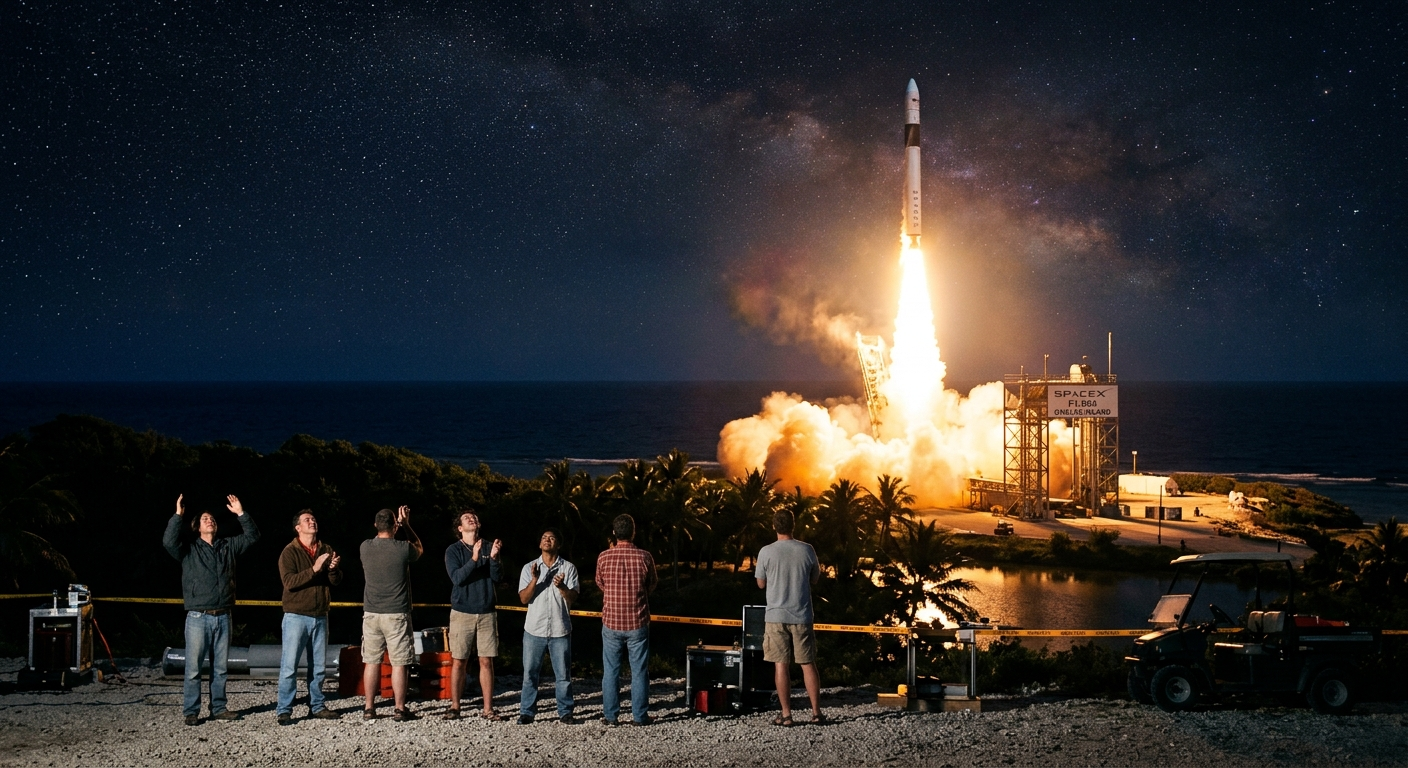
On September 28, 2008, a rocket called Falcon 1 did something no privately built liquid-fuel vehicle had ever done before — it made it to orbit. It sounds simple when you say it like that. But what that sentence doesn't capture is that this was the fourth attempt. The first three had failed. The team had poured everything into this moment, and on that night, on a tiny island launch site in the middle of the Pacific, a small company proved that you didn't need to be a government to reach space.
Think about what that took. Not just the engineering — though that was extraordinary — but the will to keep going after three public, expensive, painful failures. In software and tech, we talk a lot about iteration and "failing fast," but there's a difference between a failed sprint and a failed rocket launch. The stakes were existential. The criticism was real. And yet the team regrouped, fixed what was broken, and launched again. That's not a motivational poster moment — that's just relentless, disciplined execution under pressure.
Here's what I think about whenever I reflect on this day: breakthroughs rarely look like breakthroughs while they're happening. They look like late nights, budget stress, and people asking whether you should just give up. Whether you're building a product, leading a team, or trying to land a new client, the story of Falcon 1 is a reminder that persistence backed by genuine problem-solving is a strategy. The fourth time wasn't lucky — it was learned. Whatever you're working on right now, ask yourself: what did the last failure actually teach you, and have you really applied it yet?