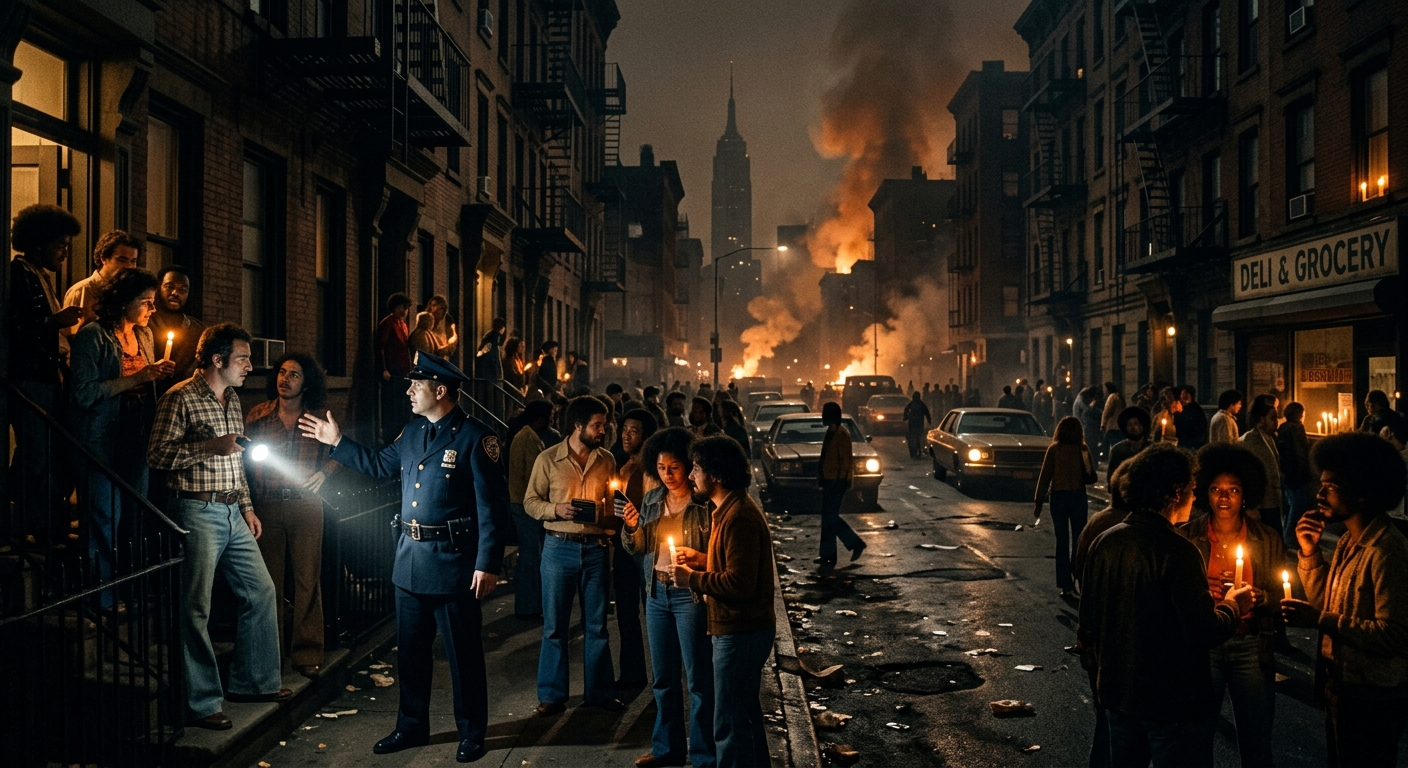
The Night the Lights Went Out
On July 13, 1977, a series of lightning strikes triggered a cascade of failures across New York City's power grid. Within hours, the entire city went dark — and stayed that way for nearly 24 hours. What followed was a mix of looting, fires, community resilience, and some hard lessons about what happens when critical infrastructure isn't built to handle failure gracefully. Over 1,600 stores were damaged and more than 3,700 people were arrested. It wasn't just a power outage. It was a full system collapse.
Here's what's fascinating from a technology perspective: the blackout didn't happen because of one catastrophic failure. It happened because a series of smaller failures cascaded — each one putting more stress on the next component until the whole thing buckled. Sound familiar? It should. This is exactly how software systems fail in production. One slow database query backs up a queue. That queue fills up and starts dropping requests. Those dropped requests trigger retry storms. Suddenly your entire platform is down and your on-call engineer is getting 47 alerts at 2am. The 1977 blackout is basically a distributed systems post-mortem, just written in neon signs going dark across Manhattan.
The real takeaway for anyone building or leading tech teams isn't just "add redundancy" (though, yes, please do that). It's about designing for graceful degradation. New York's grid in 1977 had no real mechanism for isolating failures — when one part broke, it dragged everything else with it. The best systems — and the best teams — are architected so that when something breaks, it breaks small. Features degrade instead of disappearing entirely. Users get a slower experience instead of an error screen. Leaders make decisions with partial information rather than waiting for perfect clarity that never comes. Resilience isn't about preventing failure. It's about what you've already built before the lights go out.