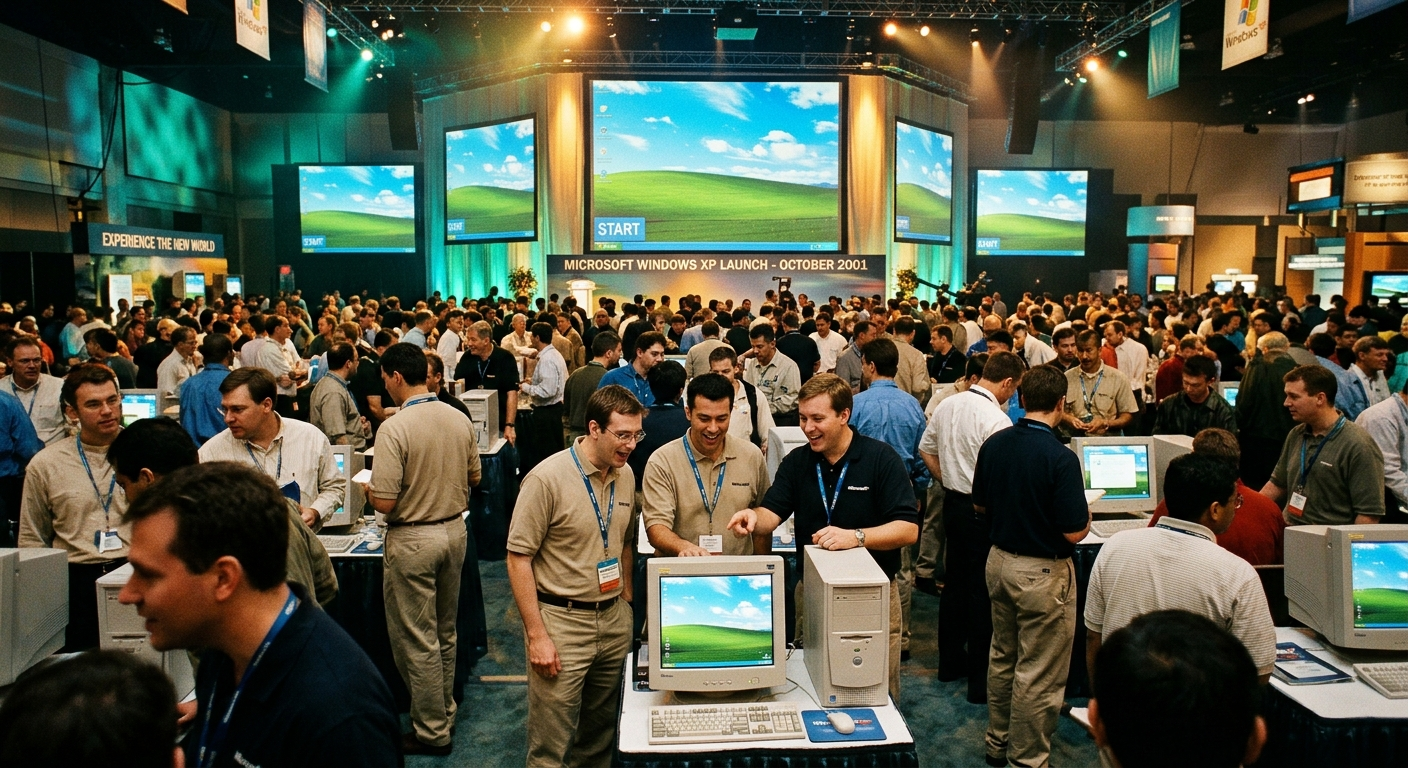
The OS That Refused to Die: What Windows XP Taught Us About Building for Users
On October 25, 2001, Microsoft released Windows XP — and whether you were a tech enthusiast, a casual home user, or an IT manager juggling a floor full of machines, you probably remember it. It shipped with that iconic green-hilled "Bliss" wallpaper, a cleaner interface than anything Windows had offered before, and a stability that made people actually trust their computers. It was so good, in fact, that people refused to stop using it. Long after Microsoft wanted them to move on, users and businesses clung to XP like a favorite worn-in jacket. Support didn't officially end until 2014 — thirteen years after launch.
That kind of longevity doesn't happen by accident. XP succeeded because Microsoft, for once, genuinely solved real problems users were having — the crashes, the confusion, the constant friction. They bridged the gap between the consumer-friendly Windows 98/ME line and the more stable Windows NT architecture, and they wrapped it in something approachable. The lesson here for anyone building software or leading a tech product today: people don't abandon tools that actually work for them. Complexity is forgiven when the core experience is reliable. Speed matters. Simplicity matters. Getting those fundamentals right is what separates software people tolerate from software people defend.
There's also something worth noting about XP's stubbornness as a case study in understanding your users. Microsoft spent years trying to push customers toward Vista, then Windows 7, then 8 — and still, in 2013, XP held something like 37% of the global desktop market share. That's not nostalgia, that's a signal. When your users dig in their heels, they're telling you something important: you haven't shown us something better yet. In tech consulting and in product development, the best move you can make isn't chasing the newest framework or the flashiest feature set — it's listening to what your users are actually doing, and building something they'll still want to use a decade from now.