The Protocol That Saved the Sky: What 1987's Montreal Agreement Teaches Us About Shipping Before You're Ready
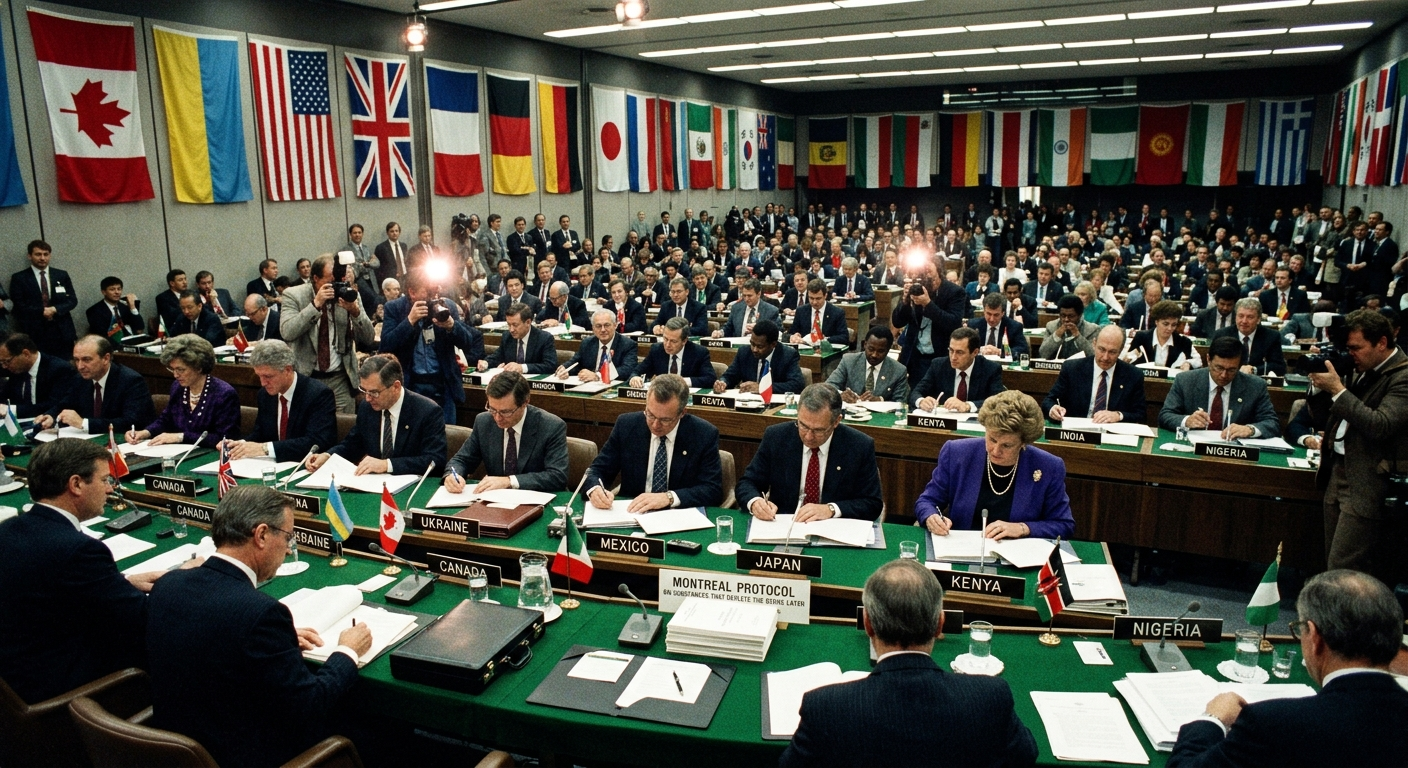
On September 16, 1987, representatives from 46 countries gathered in Montreal and signed what would later be called the most successful environmental treaty in history. The Montreal Protocol set binding targets to phase out chlorofluorocarbons — the chemicals destroying the ozone layer. Here's the part that doesn't make it into the highlight reel: when they signed it, scientists weren't entirely sure it would be enough. The targets were a compromise. The timeline was imperfect. Some key players initially pushed back hard. They shipped it anyway.
That tension — between waiting until it's perfect and doing something real right now — shows up in every software project, every product launch, every tech initiative we run at firms like this one. The teams that signed Montreal didn't have a complete picture. They had urgency, credible data, and enough agreement to take a meaningful step forward. They also built in revision mechanisms, knowing the protocol would need updates as science and technology evolved (and it did — it's been amended several times since). That's not weakness. That's agile thinking before anyone called it that. Version 1.0 of a world-saving agreement still beats a perfect plan that never launches.
The ozone layer is genuinely recovering today because a group of people decided that an imperfect, collaborative solution was better than paralysis. Whether you're leading a development team, advising a client on a digital transformation, or trying to get internal stakeholders aligned on anything — that's the reminder for today. You don't need every answer locked down before you start. You need a solid foundation, honest data, and the courage to commit. Revisions are a feature, not a failure.