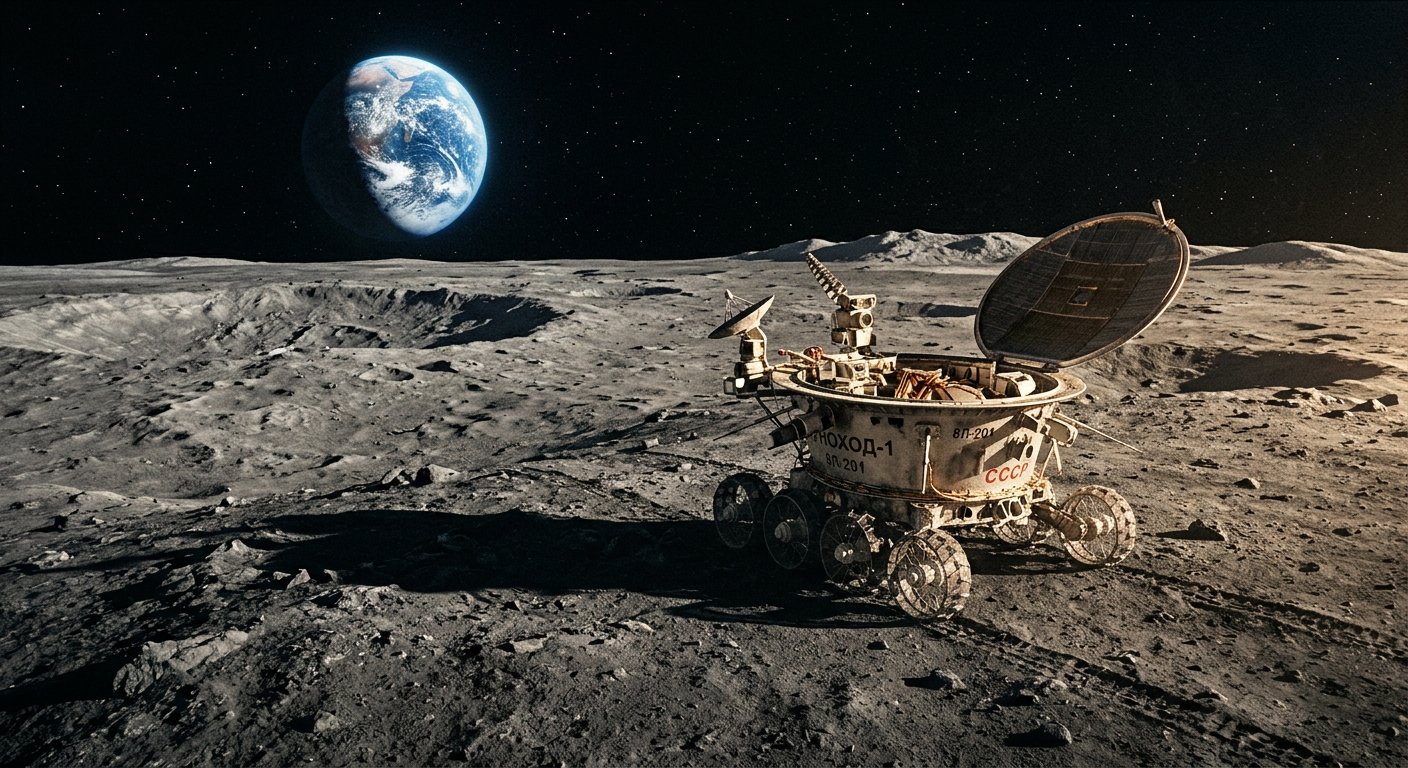
The Robot That Rolled Across the Moon
On November 17, 1970, the Soviet Union did something that still sounds almost impossible when you say it out loud: they drove a car on the Moon. From Earth. Lunokhod 1 — a bathtub-shaped, eight-wheeled rover — touched down on the Mare Imbrium and promptly began taking instructions from a five-person crew sitting in a control room hundreds of thousands of miles away. It operated for 322 days, traveled over 10 kilometers, and transmitted thousands of images back home. The whole thing ran on a time delay, imperfect signals, and an enormous amount of trust in the engineering.
Here's what strikes me about that story from a tech leadership perspective: that ground crew couldn't micromanage. The signal delay alone made real-time control impossible in any meaningful sense. They had to build a rover they trusted, define its boundaries clearly, send it out, and then let it do its job. Sound familiar? That's exactly the challenge every engineering manager faces with a distributed team, an autonomous squad, or honestly — any well-designed software system. The teams that struggle most aren't the ones with hard problems. They're the ones who can't resist the urge to hover, override, and second-guess the systems they built.
The Lunokhod program also didn't get a lot of credit at the time — the Space Race narrative was dominated by moon landings, and a rover felt like a consolation prize. But decades later, that rover's data is still being used by researchers. The quiet, unglamorous work has a long tail. If you're building infrastructure, writing documentation, refactoring legacy code, or doing any of the work that doesn't make the sprint demo — you're Lunokhod 1. Keep rolling.