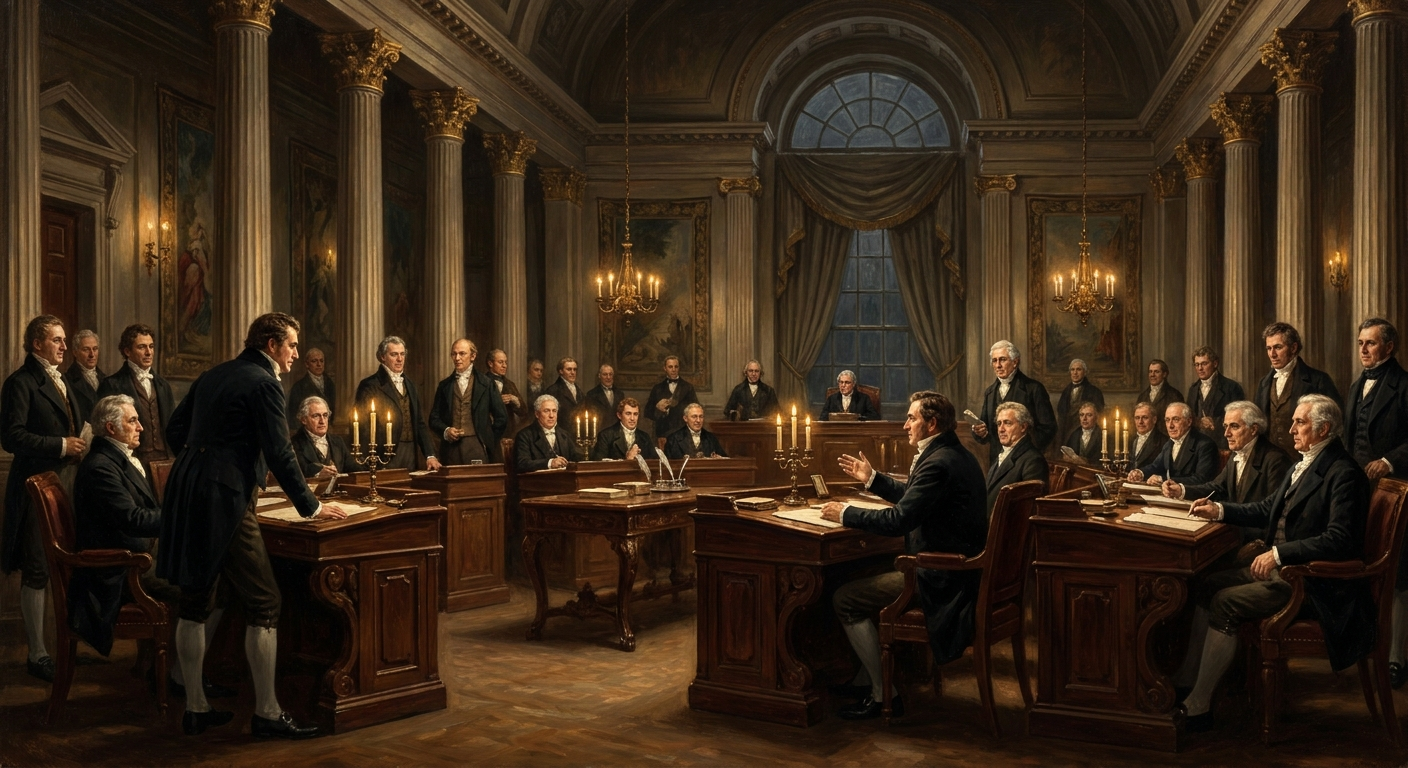
On April 16, 1818, the U.S. Senate ratified something remarkable: an agreement to stop building weapons. The Rush-Bagot Treaty between the United States and Britain essentially ended a naval arms race on the Great Lakes and Lake Champlain, with both nations agreeing to limit their warships to just a few patrol vessels each.
Think about that for a moment. Two nations that had been at war just a few years earlier (the War of 1812) decided that constantly trying to out-build each other's fleets was expensive, pointless, and ultimately made both sides less secure. Instead of continuing to pour resources into floating fortresses that would likely never see action, they chose cooperation over competition.
This reminds me of today's tech industry, where companies often get caught in feature arms races that benefit no one. Instead of endlessly copying competitors' every move or burning through capital trying to out-spend rivals, the most successful companies focus on their core strengths and sometimes even collaborate where it makes sense. The Rush-Bagot Treaty lasted over 200 years and helped create the world's longest peaceful border. Sometimes the boldest move isn't building more—it's agreeing to build less, but build it better.