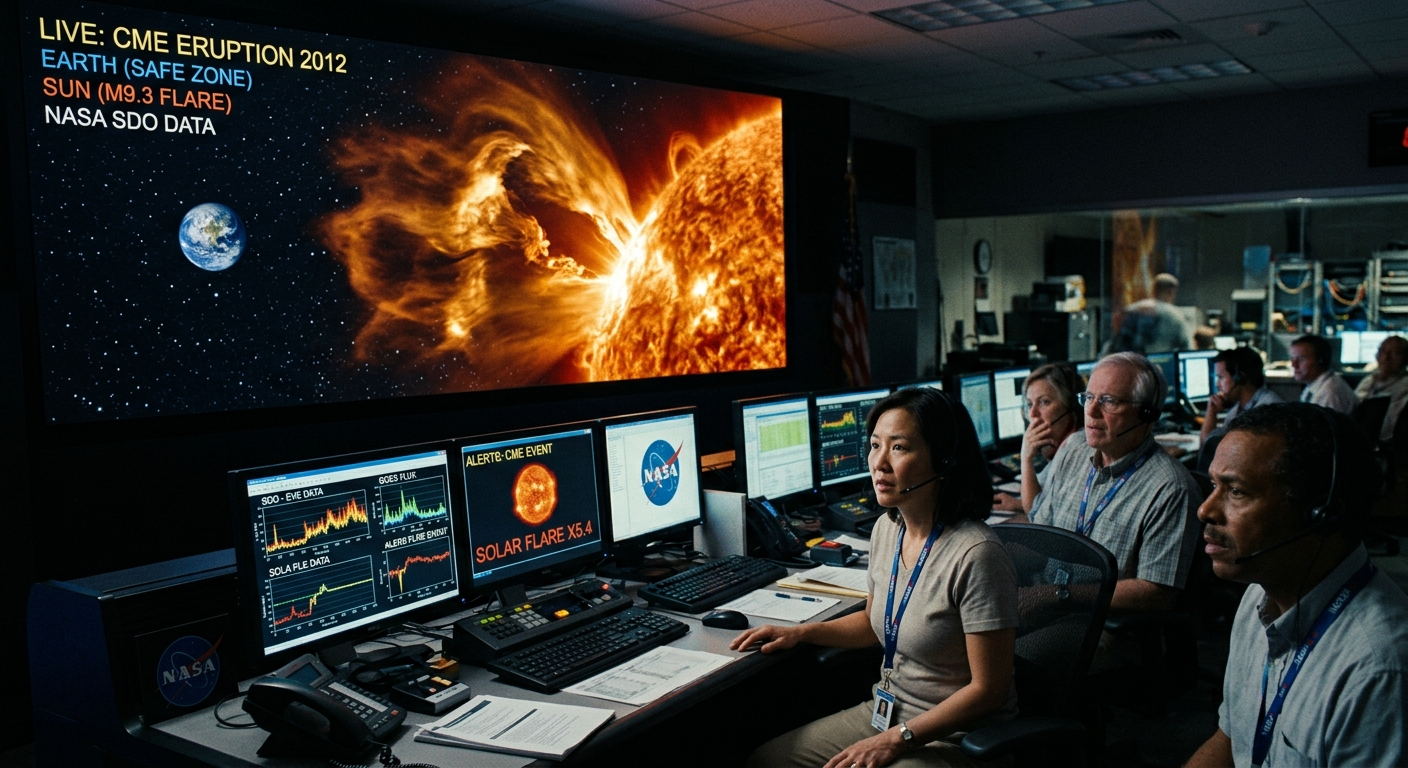
The Day the Sun Almost Took Down the Grid
On July 23, 2012, the Sun unleashed one of the most powerful coronal mass ejections ever recorded — a wall of magnetized plasma and radiation that would have slammed into Earth with catastrophic force. Scientists later estimated it could have caused up to $2.6 trillion in damage, knocking out power grids, disabling satellites, and crippling the internet infrastructure that modern civilization quietly depends on. The kicker? It missed us by nine days. Earth had passed through that exact region of space just over a week earlier. We didn't dodge a bullet — we dodged a cannonball, completely by accident.
What "Almost" Teaches Us About Systems
Here's the thing nobody talks about enough: that storm was a failure event. It just happened to fail in empty space instead of on top of us. In tech, we call this a near-miss, and the best engineering teams treat near-misses with the same seriousness as actual outages. The 2012 solar storm is a perfect case study in known, unmitigated risk — scientists had been warning about this exact scenario for decades, but because a catastrophic solar event hadn't happened in the modern connected era, it stayed in the "someday, maybe" category. Sound familiar? Think about the last time your team said "yeah, we should probably back that up" or "we'll add proper error handling in the next sprint." The sun doesn't wait for your sprint cycle.
Build Like the Storm Is Coming
The practical takeaway here isn't to panic — it's to get honest about what you're assuming will hold. Resilience isn't built after the disaster; it's built in the quiet stretches when nothing is going wrong. Whether you're architecting cloud infrastructure, building a client's e-commerce platform, or just managing a team through a stressful product launch, the question worth asking today is: what's our solar storm? What's the high-impact, low-frequency risk we've been politely ignoring? The difference between $2.6 trillion in damage and a normal Tuesday in July 2012 was nine days of orbital mechanics. For your systems, that margin might be a well-tested backup, a documented runbook, or a 30-minute conversation you've been putting off. Take the nine days while you still have them.