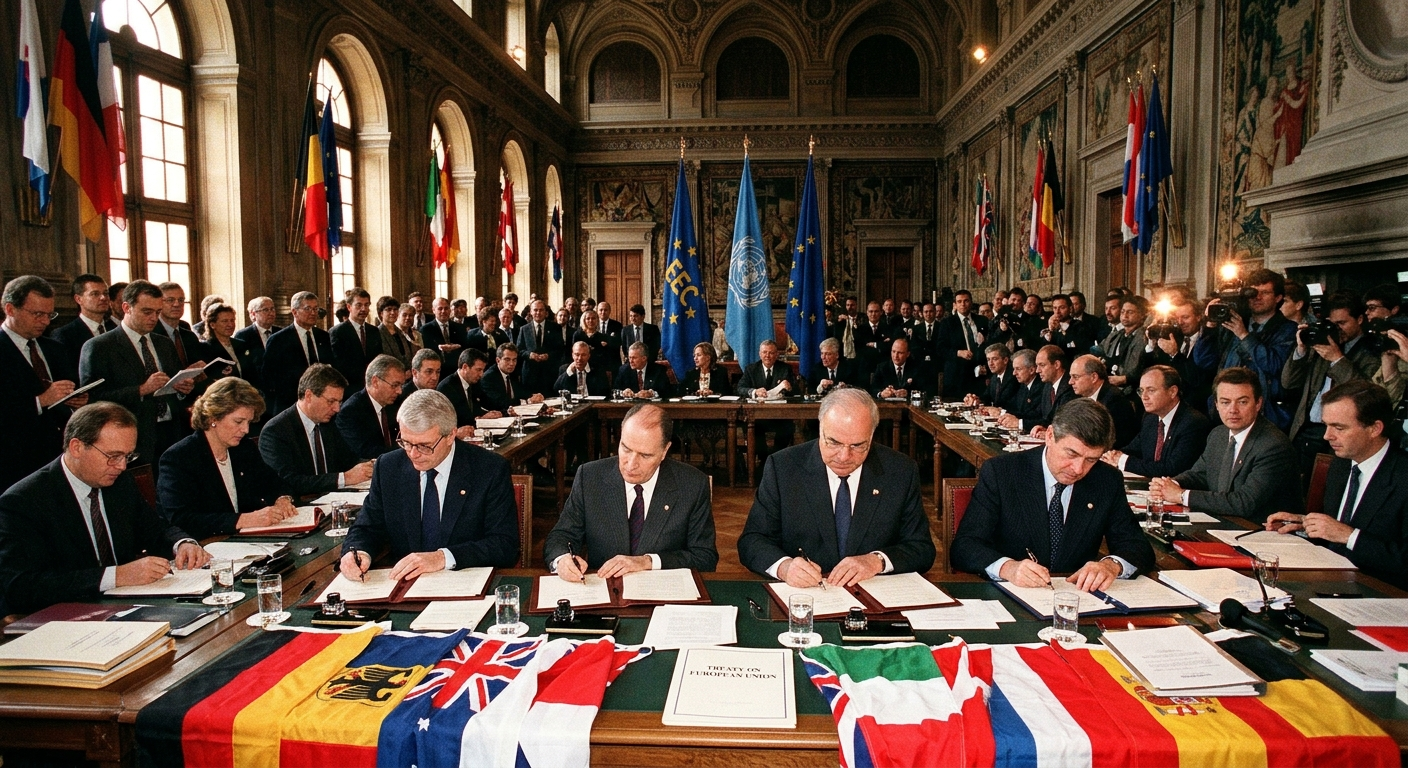
The Treaty That Built a Continent: What the 1993 Maastricht Moment Teaches Us About Shipping Big
On November 1, 1993, something that had been negotiated, argued over, ratified, nearly derailed, and revised finally went live. The Maastricht Treaty took effect, and the European Union — as a formal, legal, functioning entity — existed for the first time. It wasn't a perfect document. It was a compromise that satisfied almost no one completely. And it changed the world anyway.
Here's what's easy to forget: the treaty had been signed over a year and a half earlier, in February 1992. But it still had to survive Danish voters rejecting it in a referendum, then approving a modified version, a French vote that passed by the slimmest possible margin, and a legal challenge in Germany that went all the way to the constitutional court. By the time it actually took effect, it had been poked, patched, and stress-tested by millions of skeptics. Sound familiar? That's just called shipping software. The messy path from "we all agreed on this" to "this is actually running in production" is rarely clean, and the people who built the EU in 1993 would probably nod knowingly at any team that's ever watched a launch date slip three times before the thing finally went live.
The real lesson here isn't about grand vision — though vision matters. It's about persistence through friction. The architects of the EU didn't scrap the project when Denmark said no. They listened, adapted, and kept moving. In tech consulting, we see this constantly: the clients who build something lasting aren't the ones with the cleanest roadmaps. They're the ones who treat setbacks as feedback loops rather than verdicts. Thirty-plus years later, the EU — flawed, complicated, perpetually debated — is still running. Sometimes "shipped and imperfect" genuinely does beat "perfect and never launched."