They Heard the Universe Whisper: What Gravitational Waves Teach Us About Patient Innovation
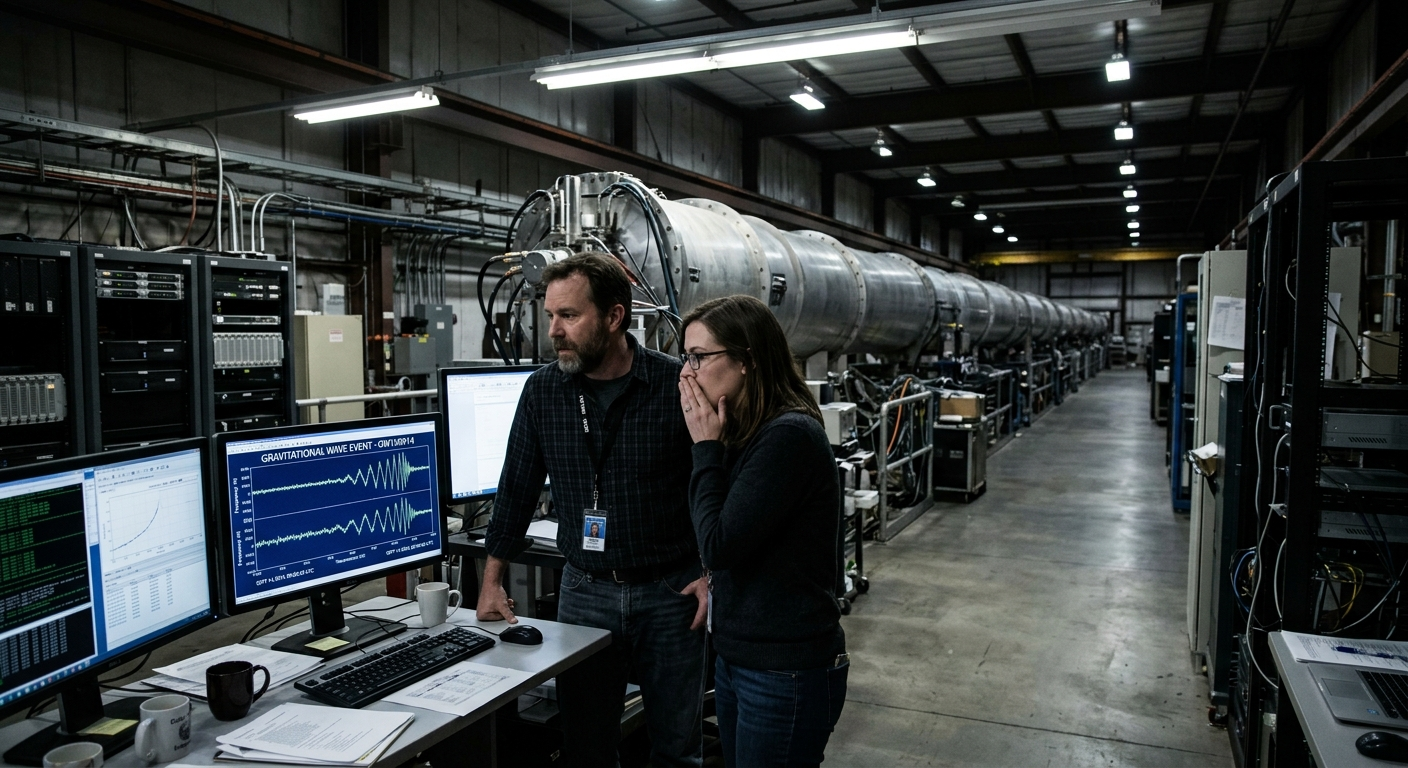
On September 14, 2015, at 5:51 in the morning Eastern Time, two giant detectors — one in Louisiana, one in Washington State — picked up a tiny ripple in the fabric of space-time. The signal lasted less than a second. It was caused by two black holes colliding over a billion light-years away. Scientists had been hunting for this exact signal since Albert Einstein first predicted gravitational waves back in 1916. That's nearly 100 years of theoretical work, failed attempts, incremental engineering improvements, and quiet, stubborn belief before the universe finally confirmed what they suspected all along.
Here's the part that gets me: the researchers didn't even announce the discovery until February 2016 — five months later. They spent that time checking, double-checking, and triple-checking the data. In a world of hot takes and rushed product launches, an entire team sat on one of the greatest scientific discoveries in human history just to make sure they got it right. There's something almost countercultural about that kind of discipline. In tech, we talk a lot about moving fast. But the LIGO collaboration moved carefully, and because of that, their announcement landed with absolute authority.
If you're grinding away on a product, a platform, or a problem that doesn't seem to be paying off yet — this is your reminder that some signals take a long time to arrive. The work you're doing today, the architecture decisions, the user research, the late nights debugging something nobody else even knows is broken — that's all infrastructure for a moment that will come. Einstein didn't live to see his prediction confirmed. But the prediction was right, and the work was worth it. Build like you believe in what you're building, even when the data hasn't arrived yet.