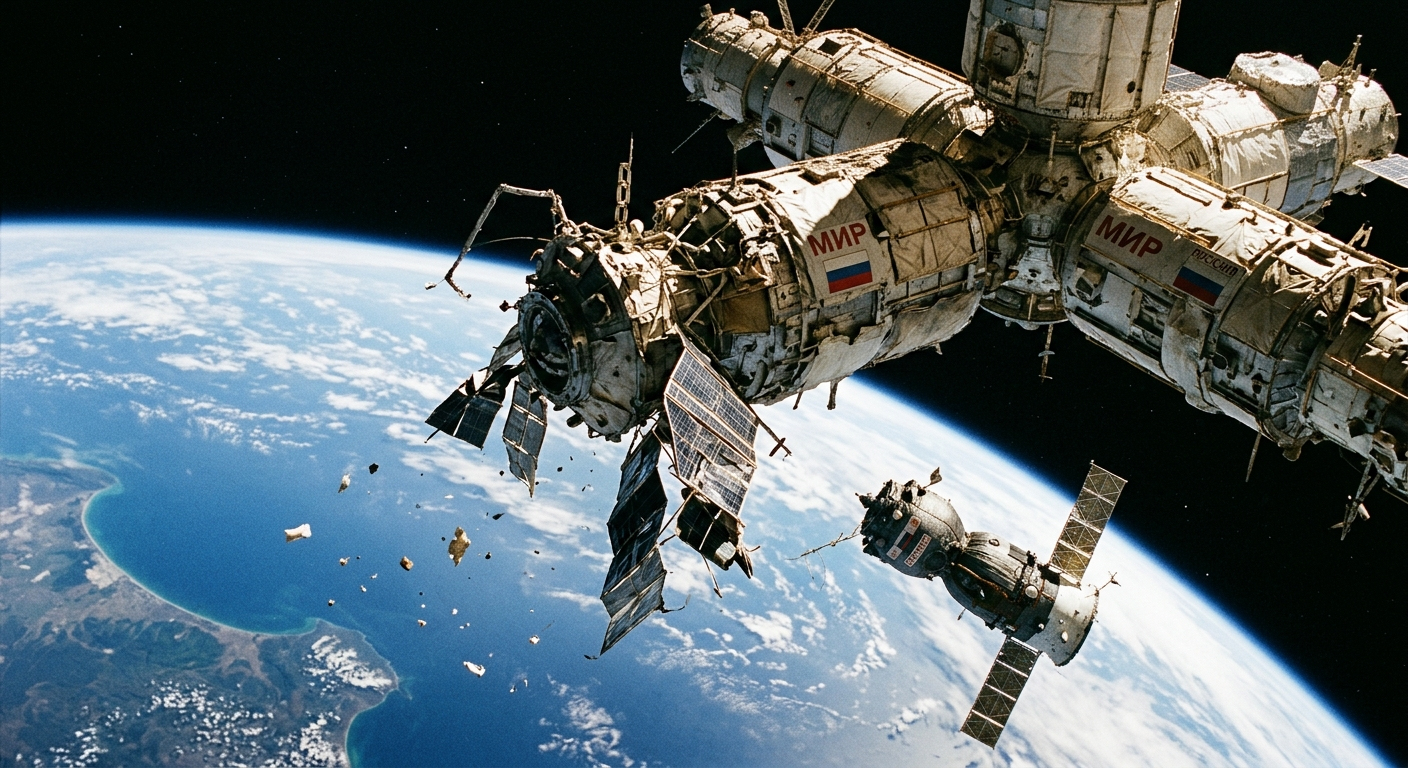
When a Spacecraft Collides with Your Space Station: Lessons in Resilience from Mir's Worst Day
On June 25, 1997, something went terribly wrong about 390 kilometers above Earth. An uncrewed Russian Progress resupply spacecraft — being manually guided in an experimental docking test — misjudged its approach and slammed directly into the Spektr module of the Mir space station. The collision punctured the hull, caused a dangerous pressure drop, and sent Mir tumbling out of its normal orientation. The crew had maybe minutes to respond before things got catastrophically worse. No backup system. No ground team who could fly up and fix it. Just three people, a failing station, and whatever they could figure out on the fly.
Here's what's remarkable: they didn't lose the station. The crew sealed off the damaged Spektr module, manually rerouted power, and stabilized Mir over the following hours and days. It wasn't elegant. It wasn't in any manual. It worked anyway. That's a scenario every engineer and tech leader knows in a different context — the production environment does something nobody planned for, the elegant solution isn't available, and you have to make something work right now with what's in front of you. The people who keep their heads, communicate clearly, and take decisive action under that pressure are worth their weight in gold. You can't fully train for it. You can build a culture that's ready for it.
The 1997 Mir collision is also a quiet reminder that "experimental" carries real risk — and that's not a reason to avoid it. The manual docking test that caused the accident was trying to solve a real problem. Innovation that only happens in safe conditions isn't really innovation. The honest move is to try hard things, build teams capable of handling the fallout when things go wrong, and treat every near-disaster as data. Mir kept flying until 2001. The crew that saved it that June didn't do it because everything went right. They did it because they were ready for everything to go wrong.