When a Spacecraft Crashes and the Data Survives
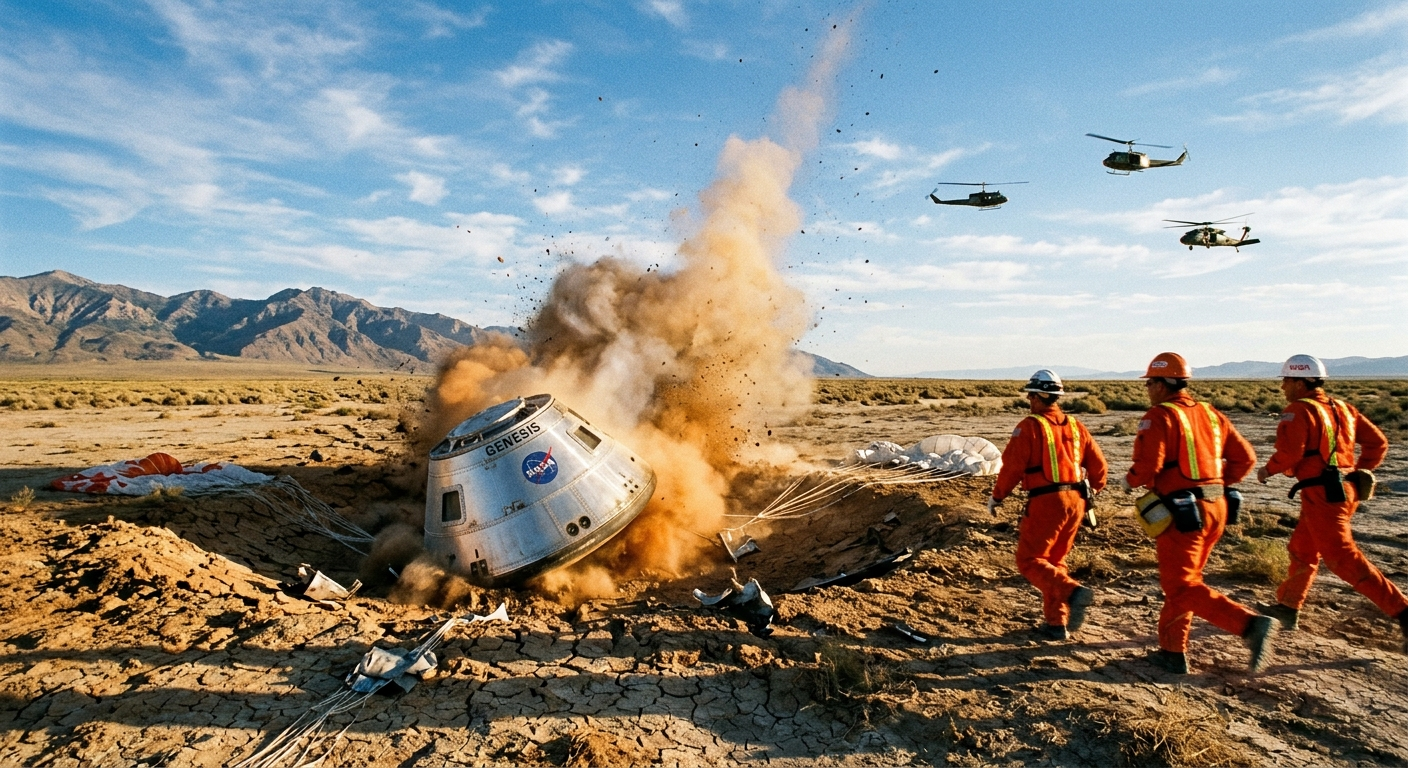
On September 8, 2004, NASA's Genesis capsule came screaming back to Earth after three years collecting solar wind particles — and then the parachute simply didn't open. It hit the Utah desert at roughly 300 miles per hour, burying itself in the ground and shattering the delicate collector arrays that held three years worth of science.
By any reasonable measure, it looked like a total failure. And yet — here's the part worth remembering — the science team didn't walk away. They carefully excavated the crash site, pieced together contaminated and shattered fragments, and eventually published findings that genuinely changed our understanding of how the solar system formed. The mission that "failed" still delivered. It just required a lot of unglamorous recovery work that nobody had planned for.
There's something deeply relevant here for anyone building software or leading a technical team. We plan for launches, not crash landings. We write deployment runbooks, not recovery playbooks. But some of the most valuable work — and honestly, some of the most revealing moments about your team's real character — happens after the thing breaks. Genesis is a good reminder that a failed deployment, a botched launch, or a system outage isn't automatically a wasted effort. The question is whether you built something worth recovering, and whether your team has the patience to do the unglamorous work of digging through the wreckage. Sometimes the samples survive. Go find them.