When All Four Engines Quit: What a 1982 Miracle Flight Teaches Us About Graceful Failure
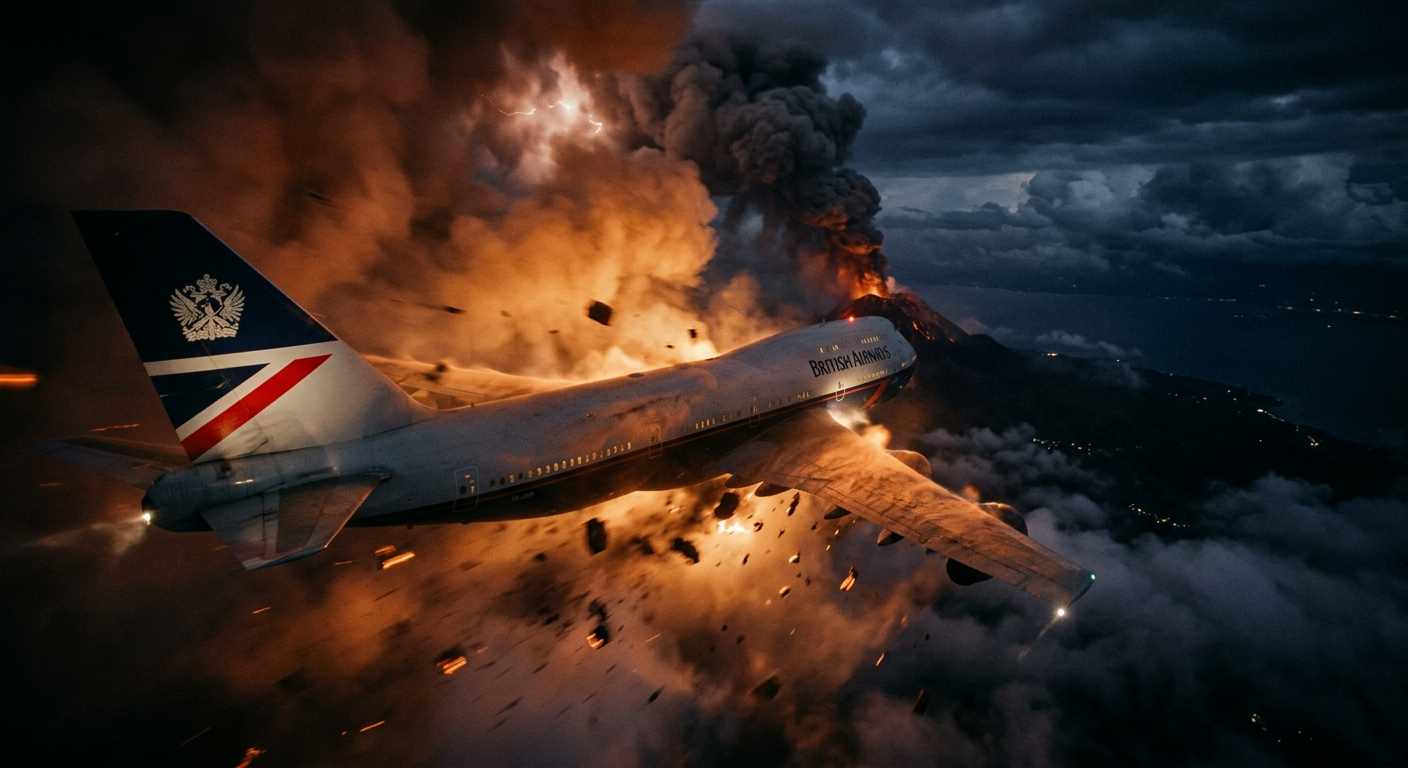
On June 24, 1982, British Airways Flight 009 did something that should have been impossible — it flew a Boeing 747 with zero working engines for nearly 16 minutes over the Indian Ocean. The crew had unknowingly flown into a cloud of volcanic ash from the eruption of Mount Galunggung in Indonesia. One by one, all four engines flamed out. The cabin filled with an eerie St. Elmo's fire glow, the smell of sulfur crept through the air, and Captain Eric Moody calmly announced to passengers: "We have a small problem. All four engines have stopped." The understatement of the century. Through disciplined troubleshooting, the crew restarted the engines one at a time and landed safely in Jakarta. Nobody died.
Here's what hits differently when you look at this from a tech lens: the crew didn't freeze because everything failed simultaneously. They worked the problem in order, using checklists, staying in their lanes, and communicating without panic. Sound familiar? It should — because that's exactly what separates good engineering teams from great ones when production goes down at 2 a.m. The instinct when a system catastrophically fails is to do everything at once — rollback, hotfix, restart services, call the CEO. But Flight 009 survived because the pilots resisted that instinct. They glided, they assessed, they restarted one engine at a time. Methodical beats frantic, every single time.
The other thing worth sitting with: nobody on that flight crew had trained specifically for all four engines failing due to volcanic ash. That scenario wasn't in the manual. What was trained was the underlying discipline of systems thinking — understand your inputs, isolate your variables, test incrementally. In software, your "volcanic ash cloud" might be a cascading microservices failure, a zero-day exploit, or a database migration gone sideways. You won't always see it coming. But if your team has the muscle memory of calm, structured problem-solving baked in, you'll glide when you need to glide — and restart your engines before you hit the ground. Build that culture now, before the ash cloud shows up.