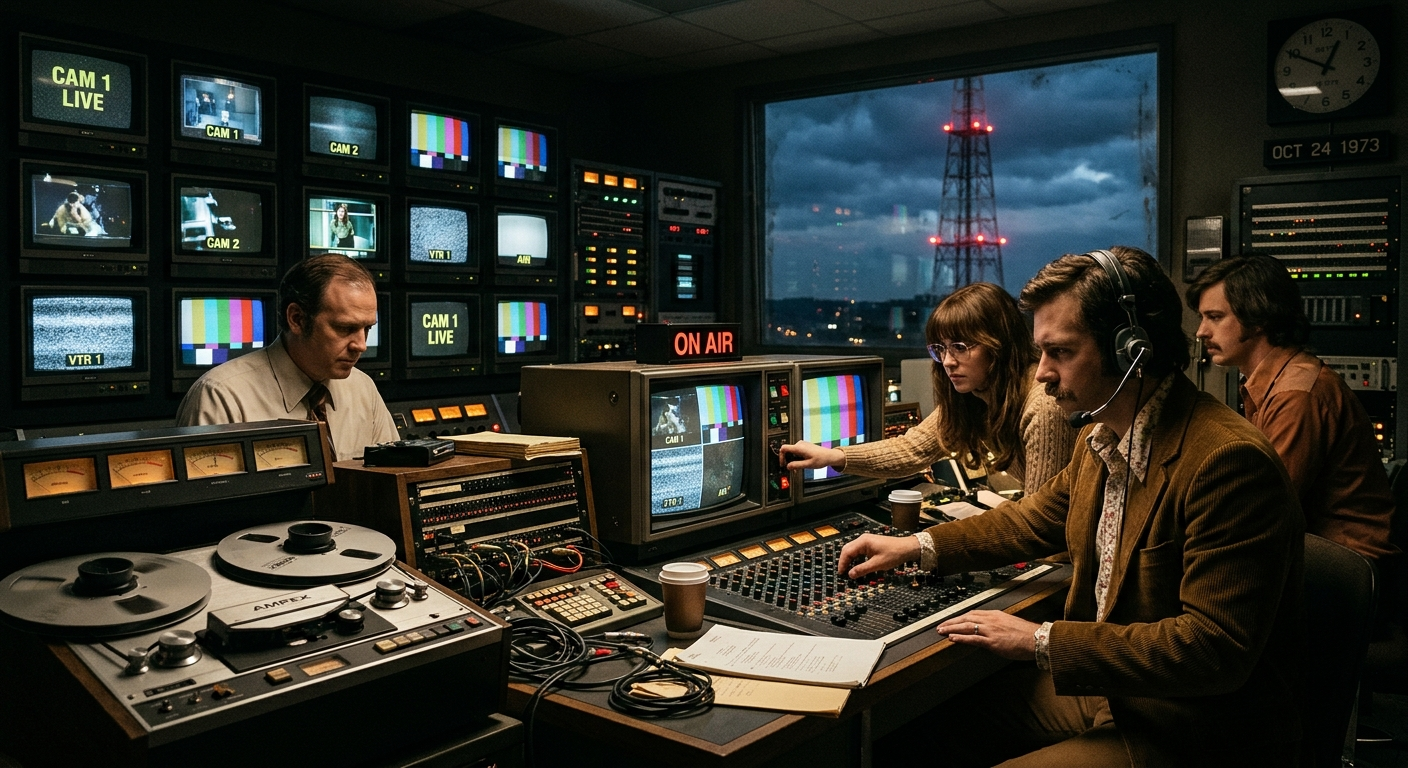
The Switch Nobody Knew Would Change Everything
On November 8, 1972, a fledgling pay-television service called Home Box Office flipped on for the first time, broadcasting a hockey game and a Paul Newman film to a few hundred subscribers in Wilkes-Barre, Pennsylvania. That's it. A hockey game. A modest crowd. A technology that most of the industry thought was a novelty at best and a money pit at worst. Nobody in that room knew they were standing at the beginning of a multi-billion dollar industry that would eventually spawn Netflix, Disney+, and the entire streaming economy we live inside today.
Here's what's worth sitting with: HBO didn't launch with a guaranteed audience, a proven model, or industry buy-in. They launched with a hypothesis. The idea was simple — people would pay for content if it was good enough and convenient enough. That hypothesis took years to validate, survived enormous skepticism, and required constant iteration. Sound familiar? Most of the best technology bets in history looked foolish at the moment someone made them. The teams building meaningful software today are operating on the same kind of faith — that the problem they're solving matters, that the timing is close enough to right, and that they can figure out the rest as they go.
For anyone leading a tech project or running a business right now, the HBO origin story is a useful reminder that the signal is almost never obvious at launch. A few hundred cable subscribers in Pennsylvania was not a vanity metric — it was proof of concept, the first real data point in a much longer story. The question worth asking about your own work today isn't "is this already working at scale?" It's "does this hypothesis deserve another iteration?" Most things that matter start small, uncertain, and a little weird. The trick is staying in the game long enough to find out which bets were right.