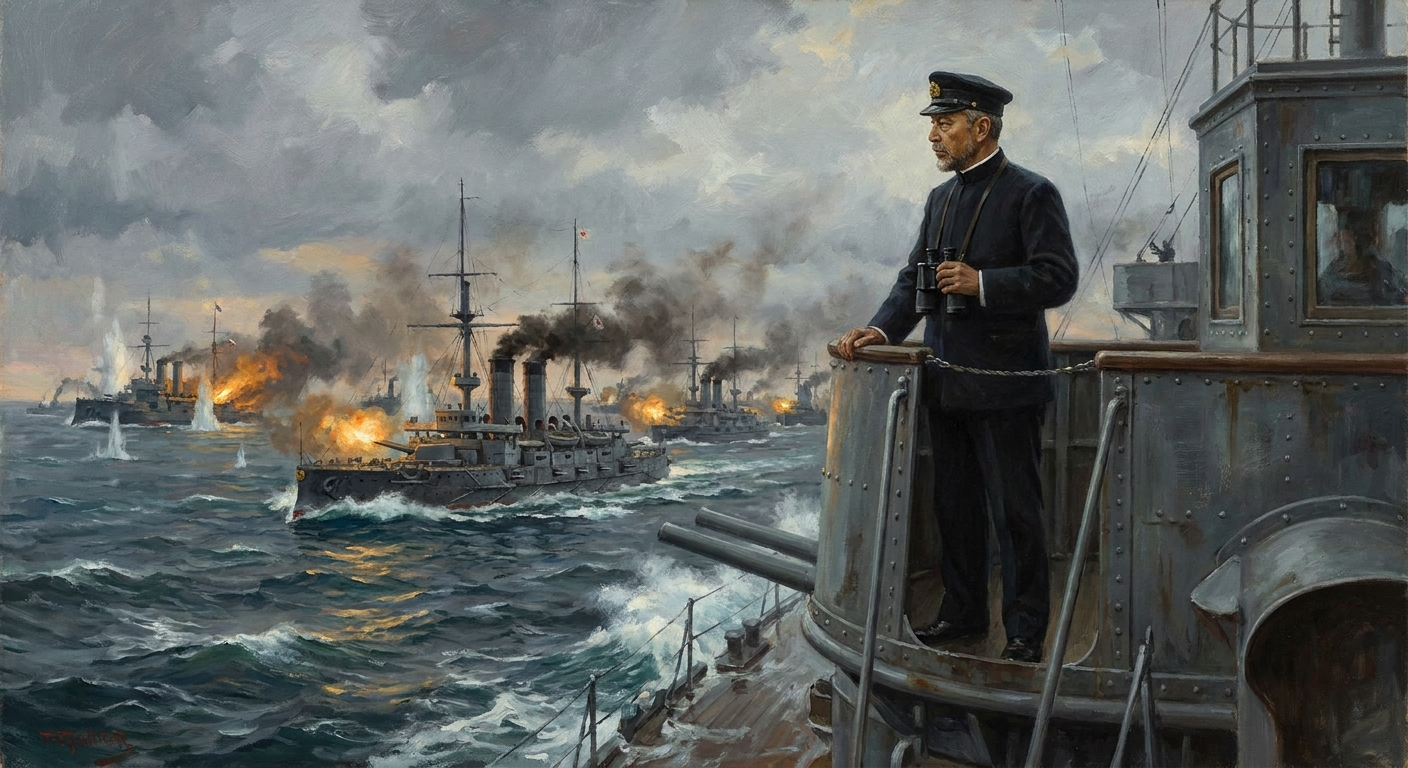
On May 28, 1905, Admiral Tōgō Heihachirō achieved what many considered impossible: the complete destruction of the Russian Baltic Fleet at the Battle of Tsushima. This wasn't just a military victory—it was a masterclass in how technological innovation, strategic thinking, and flawless execution can disrupt established power structures. The Japanese Navy had embraced new naval technologies and tactics while their opponents relied on outdated approaches, resulting in one of the most decisive naval victories in history.
What strikes me about Tōgō's success is how it mirrors the challenges we face in tech leadership today. Just as the Admiral combined cutting-edge naval technology with superior strategic positioning, successful tech teams must balance innovation with smart execution. The Russians had more ships and firepower on paper, but the Japanese had better communication systems, more advanced fire control, and crucially, a unified strategic vision. Sound familiar? It's the same dynamic we see when agile startups outmaneuver established corporations—superior technology and clearer focus often trump raw resources.
The lesson for modern tech leaders isn't just about having the latest tools or the biggest team. Tōgō's victory reminds us that transformative success comes from the intersection of technological capability and strategic clarity. Whether you're architecting a new system, leading a development team, or disrupting an industry, the same principles apply: embrace innovation, maintain clear communication, and never underestimate the power of unified execution. Sometimes the most decisive victories come not from having more, but from using what you have more effectively.