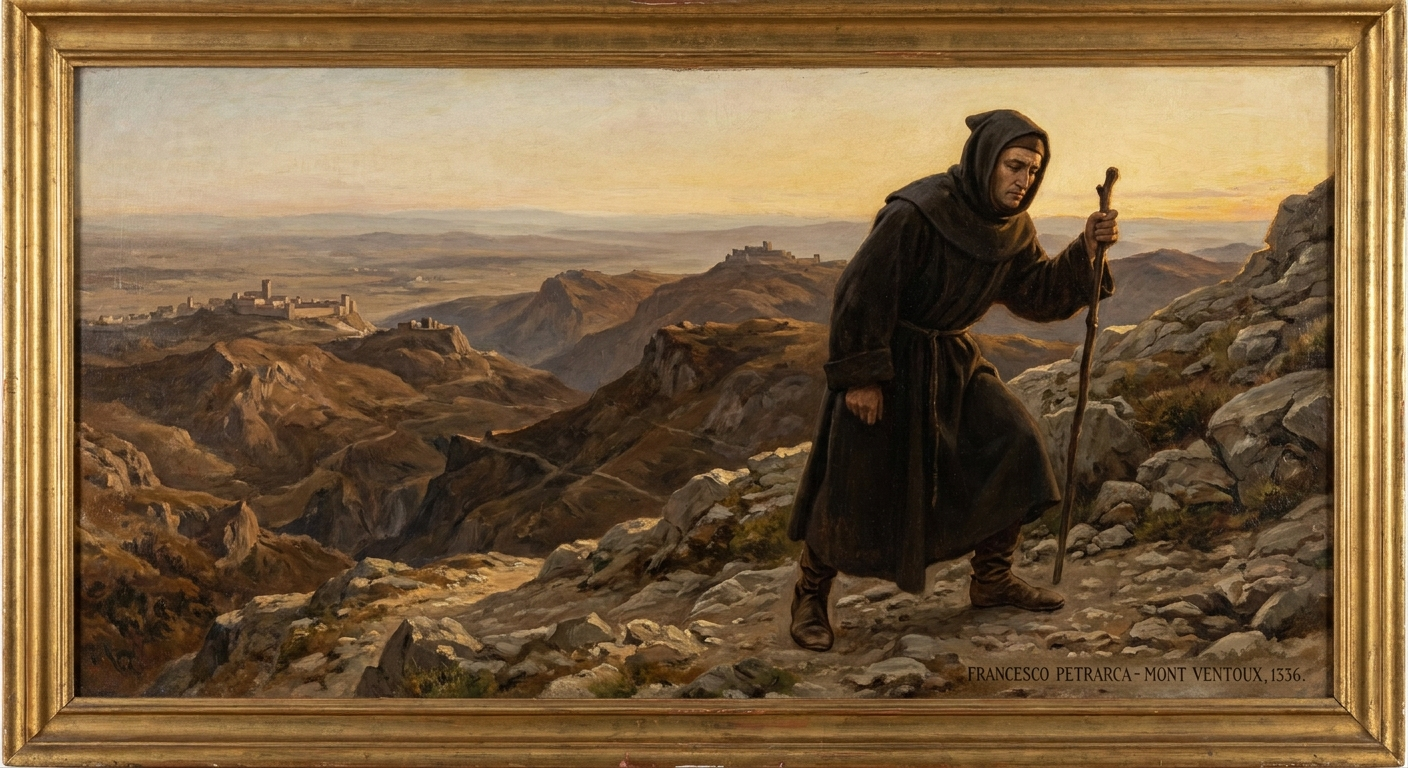
On April 26, 1336, a restless Italian scholar named Francesco Petrarch did something that seems utterly mundane to us today—he climbed a mountain. But here's the thing: nobody climbed mountains back then. Not for fun, not for the view, and certainly not to satisfy personal curiosity. Medieval folks thought you were either crazy or heretical if you went looking for experiences just because you wanted to understand the world better.
Petrarch's ascent of Mont Ventoux in southern France was revolutionary precisely because it was pointless by medieval standards. He wasn't fleeing enemies, seeking treasure, or fulfilling a religious pilgrimage. He climbed simply because he was curious about what he'd see from the top. That shift from "Why would you do that?" to "What might we discover?" became one of the foundational mindsets of the Renaissance—and it's the exact same spirit that drives every great breakthrough in tech today.
Think about it: every startup founder who builds something the market doesn't think it needs yet, every developer who refactors working code just to see if there's a better way, every team that experiments with a new framework because they're curious about the possibilities—they're all channeling Petrarch's mountain-climbing energy. The best innovations don't come from following well-worn paths; they come from people willing to climb their own Mont Ventoux, driven by nothing more than curiosity and the belief that the view from the top might change everything.