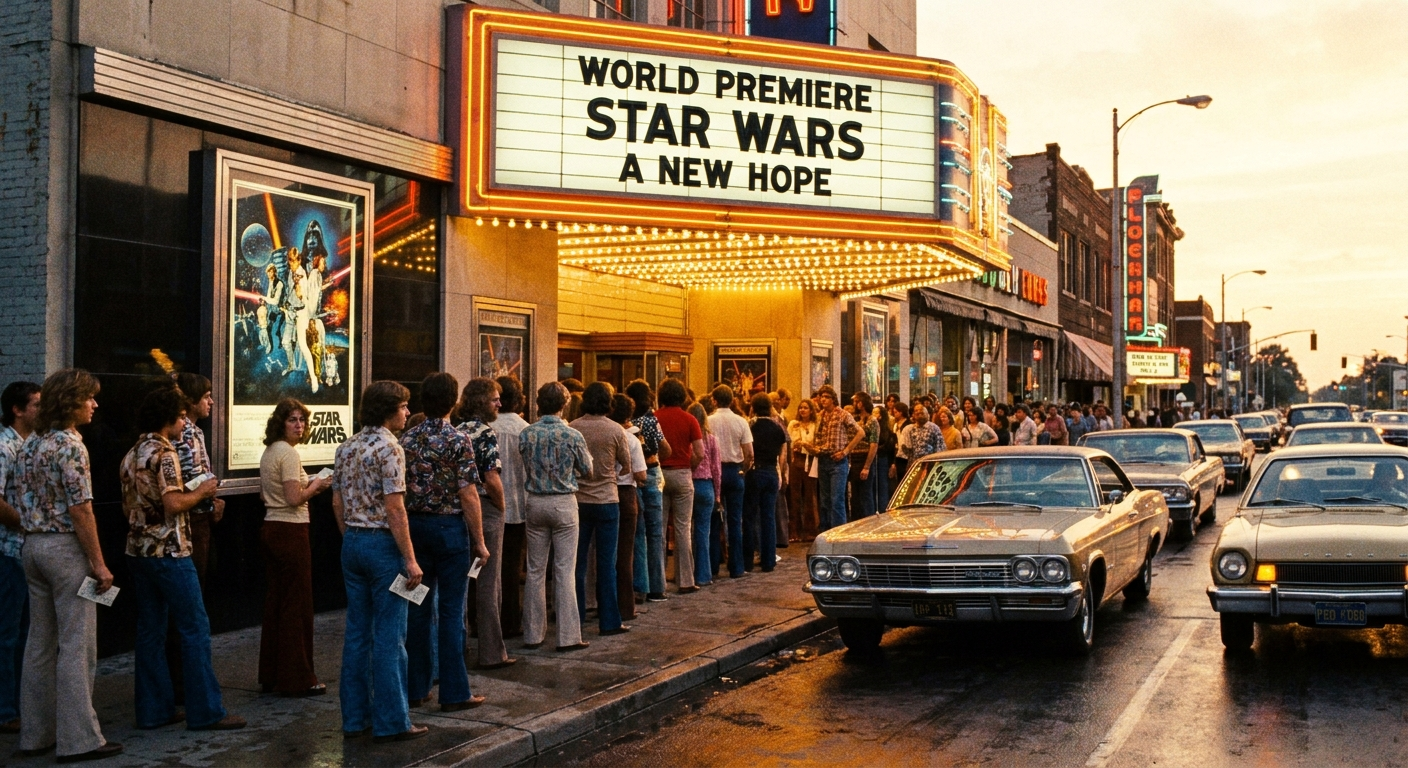
Forty-seven years ago today, a young filmmaker's "space opera" hit theaters after being rejected by nearly every major studio in Hollywood. George Lucas's Star Wars wasn't just another movie release on May 25, 1977—it was a masterclass in perseverance that every tech entrepreneur should study.
Lucas had a vision that seemed impossible to sell: a science fiction epic inspired by samurai films and Flash Gordon serials, complete with mystical forces and practical effects that pushed the boundaries of what was technically feasible. Studio executives called it "too weird" and "unmarketable." Sound familiar? Every groundbreaking tech product faces similar skepticism. The iPhone was dismissed as "just another phone." Airbnb was rejected by investors who couldn't imagine strangers staying in each other's homes.
What Lucas understood—and what separates successful tech leaders from the rest—is that revolutionary ideas rarely make sense to everyone at first. He didn't compromise his core vision, but he did adapt his approach, eventually finding a studio willing to take a chance. More importantly, he retained the merchandising rights that everyone else thought were worthless, building an empire that's still expanding today. Sometimes the biggest opportunities hide in the details others overlook. In our industry, that might mean owning your data, protecting your IP, or seeing potential in an emerging technology that others dismiss. The force isn't just strong with those who dream big—it's strongest with those who execute relentlessly on their vision, even when the galaxy seems aligned against them.