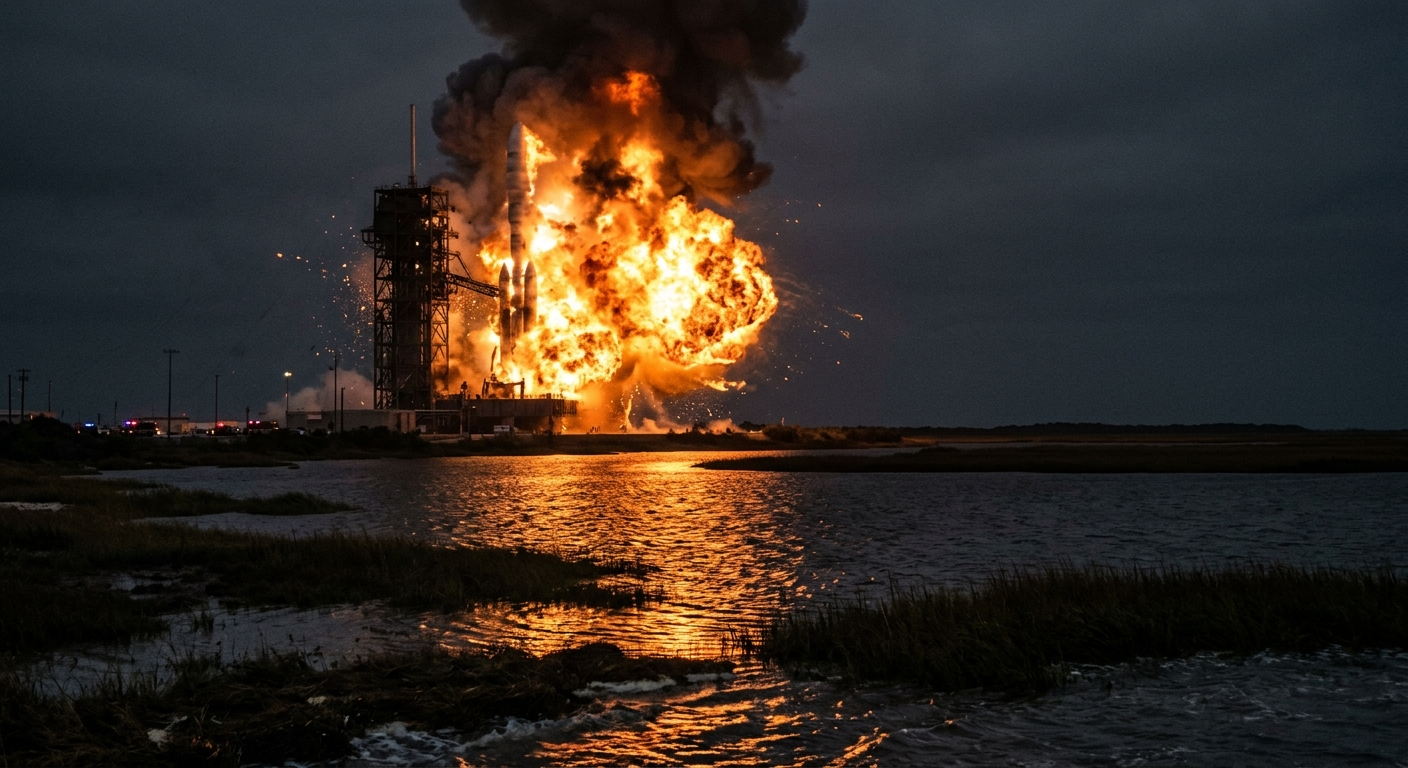
When the Rocket Explodes on the Launchpad
On October 28, 2014, just six seconds after liftoff from Wallops Island, Virginia, the Antares rocket carrying NASA's Cygnus CRS Orb-3 resupply mission turned into a $200 million fireball. No crew was lost — it was unmanned — but the payload, the mission, and a whole lot of carefully engineered work went up in smoke in the time it takes to read this sentence. Six seconds. That's it.
Here's the thing about catastrophic failures in tech: they almost never feel like they're coming. The countdown looks clean, the checklist is done, everyone's watching with cautious optimism — and then something buried deep in the system, something nobody flagged or maybe even could have flagged, makes itself known in the most spectacular way possible. If you've ever pushed a release that took down production, or watched a client demo crater in real time, you know that specific flavor of stomach-drop. The scale is different. The feeling isn't. What Orbital Sciences (now Northrop Grumman) did next is the part worth paying attention to: they investigated thoroughly, they rebuilt, and they flew again. The program didn't die on that launchpad.
In software and tech consulting, we talk a lot about building resilient systems, but the more important thing is building resilient teams — people who can absorb a six-second disaster, do the honest post-mortem without pointing fingers, and show up the next day ready to solve the actual problem. The rocket that failed in 2014 was eventually traced in part to aging Soviet-era engine components. Decades-old tech, quietly sitting in a critical dependency. Sound familiar? Legacy code, outdated integrations, inherited architecture — they're everyone's launchpad risk. The move isn't to panic. It's to know your stack, respect your dependencies, and build a culture where people feel safe saying "hey, I think this part might be a problem" before the countdown hits zero.