When "Unbreakable" Shatters: What Tesla's Cybertruck Disaster Taught Us About Overpromising
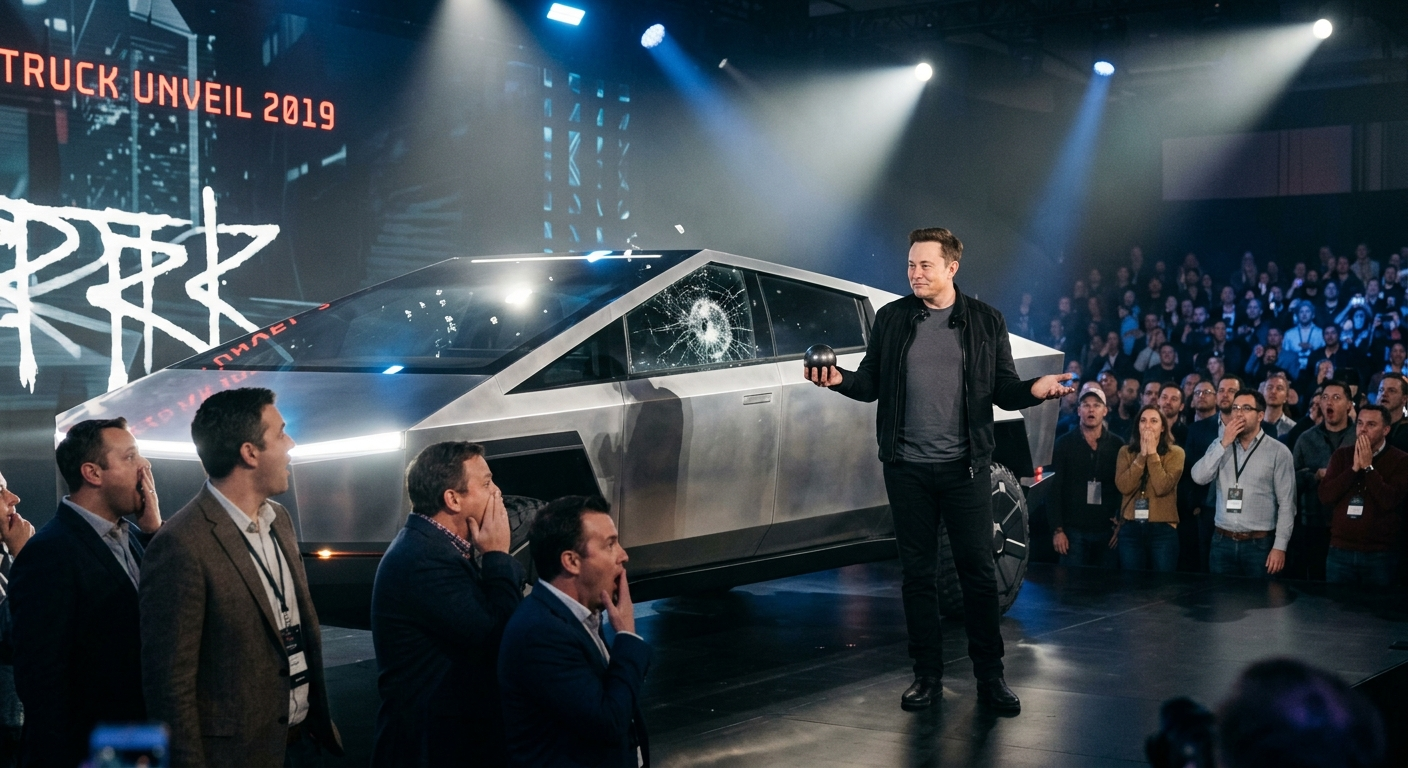
On November 21, 2019, Elon Musk stood on a stage in Hawthorne, California, ready to unveil Tesla's boldest product yet — the Cybertruck. The pitch was electric (pun intended): a futuristic, stainless steel beast with windows so tough they could take a hit from a metal ball. You probably know what happened next. Design lead Franz von Holzhausen hurled the steel ball at the driver's side window, and crack — the supposedly shatterproof glass spiderwebbed on live television, in front of thousands of people and millions watching online. Musk's reaction — "Oh my f***ing God" — said everything. They tried the rear window. Same result.
Here's the thing: the Cybertruck moment became one of the most watched product fails in tech history, and yet Tesla didn't collapse. Orders actually surged in the days after the event. Why? Because people saw something real — a team swinging big, failing publicly, and not running from it. In software development and tech consulting, we're often tempted to over-polish our demos, over-promise our timelines, and hide the rough edges. But audiences — whether they're investors, clients, or end users — are remarkably good at sniffing out performance theater. When something goes sideways in real time and your team handles it with transparency and even a little humor, that can build more trust than a flawless rehearsed show ever would.
The practical takeaway for anyone building products or leading technical teams is this: test ruthlessly before you make promises, and when you do stumble publicly, own it fast and move forward faster. The Cybertruck window shatter became a meme, sure — but it also became a symbol of a company willing to bet boldly on unconventional ideas. Your next product launch, client presentation, or software demo doesn't need to be perfect. It needs to be honest. Build the thing well, be straight about what it can and can't do, and if the window breaks — keep going.