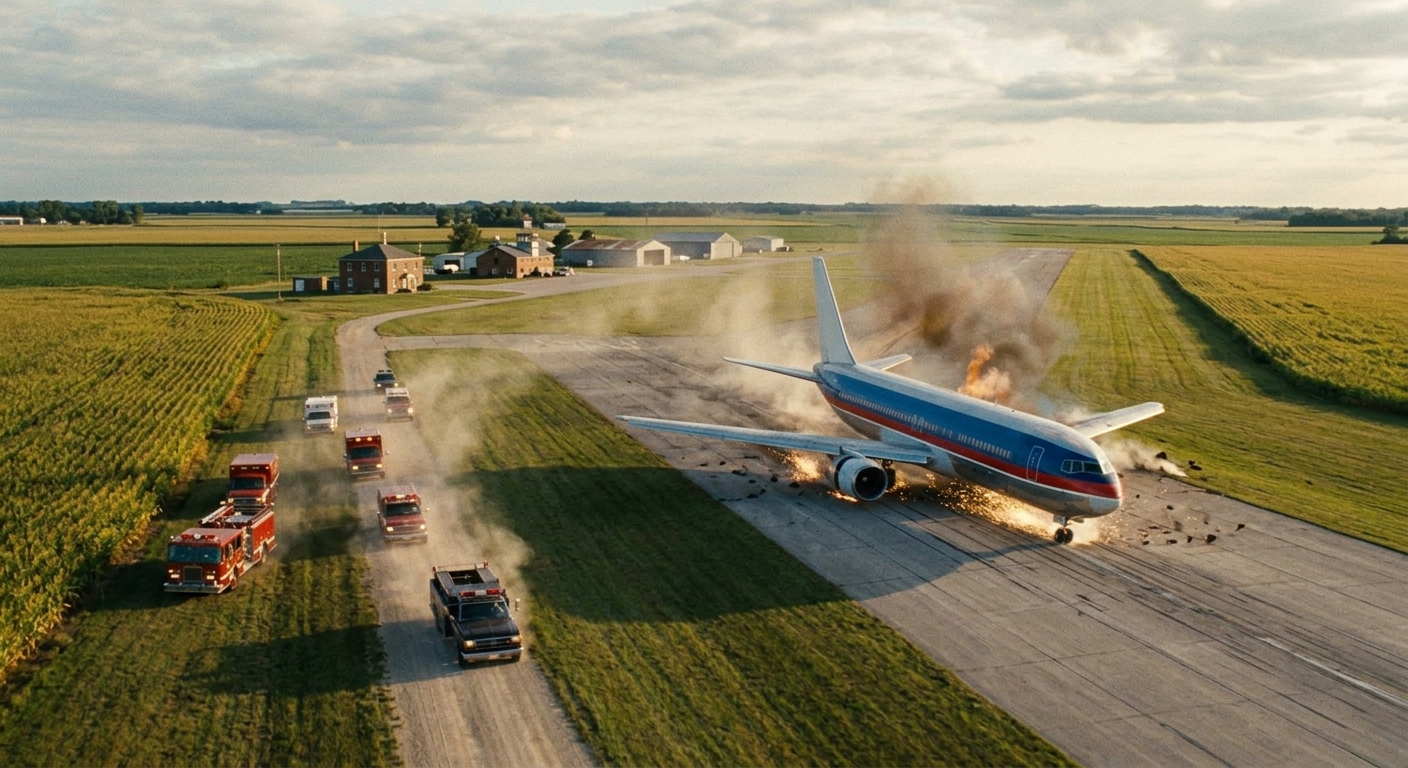
When United 232 Went Down, the Crew Did the Impossible — Here's What That Means for Your Team
On July 19, 1989, United Airlines Flight 232 lost its tail-mounted engine at 37,000 feet over Iowa. That part alone sounds survivable. Here's what doesn't: the explosion wiped out all three hydraulic systems simultaneously — something Boeing engineers had declared mathematically impossible. No steering. No brakes. No flaps. By every technical measure, the plane was unlandable. Captain Al Haynes and his crew had roughly 44 minutes to figure out something the training manuals had never covered, because nobody had ever bothered writing those pages.
What happened next is one of the most studied examples of crisis leadership in history. Haynes didn't lock himself in his own head. He looped in his first officer, his flight engineer, and — critically — a deadheading DC-10 instructor who happened to be sitting in first class. Together, they invented a technique in real time: throttling the two remaining wing engines asymmetrically to steer a plane that had no business being steerable. It didn't work perfectly. The plane cartwheeled on touchdown. But 185 of the 296 people on board survived an unsurvivable situation, largely because one captain was willing to say "I need help, and I need it now."
There's a version of that moment that lives in every tech team. The production database goes sideways. The deployment breaks something nobody anticipated. The architecture you were proud of six months ago is now the thing on fire. The instinct — especially for experienced engineers and leaders — is to go heads-down solo and fix it. But the Flight 232 lesson is that the person who asks for help fastest, thinks out loud the clearest, and pulls in the right expertise without ego is the one who lands the plane. Your runbooks won't cover everything. Your training won't either. What will carry you through is the team in the room and the trust you've built before the crisis started.
Every outage is a test of your culture, not just your code.