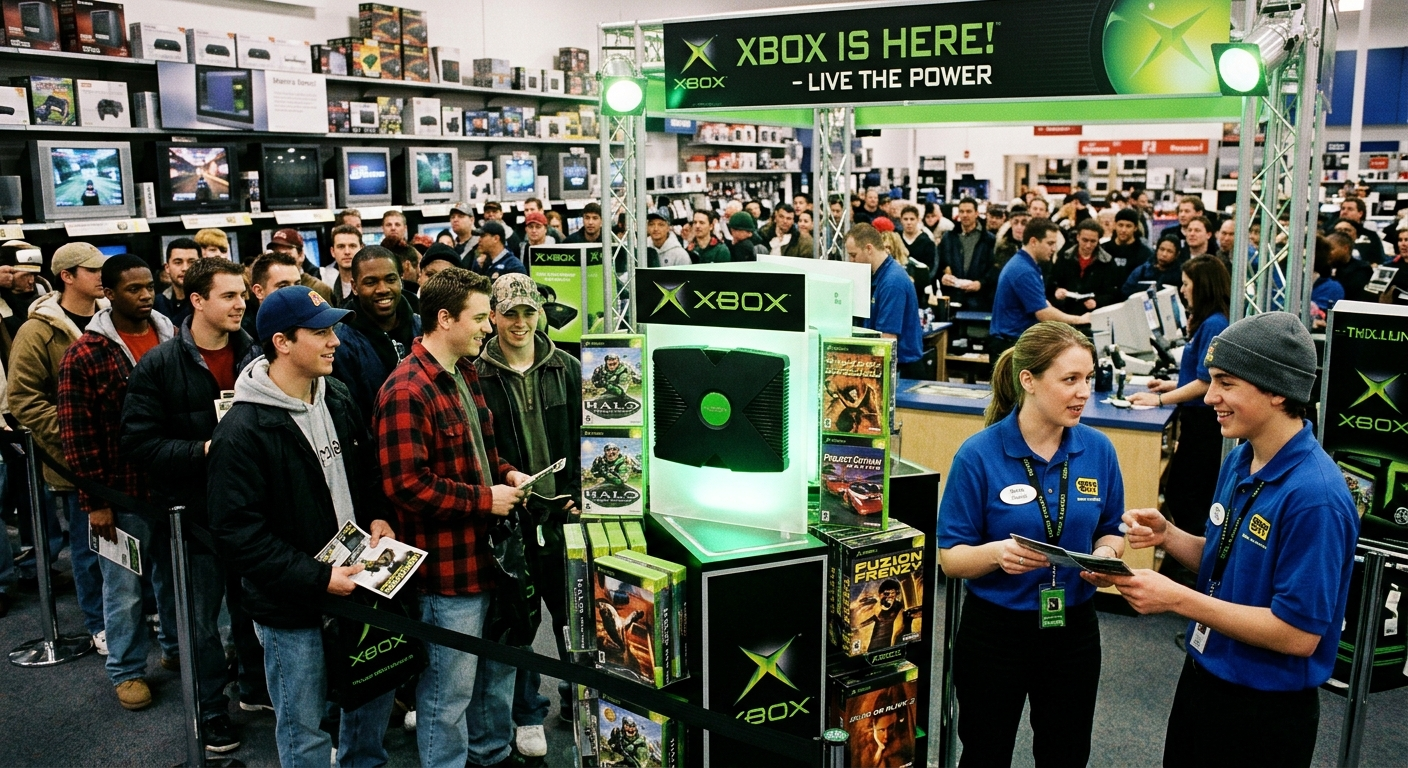
Xbox at 23: What Microsoft's Biggest Gamble Teaches Us About Betting on Yourself
On November 15, 2001, Microsoft did something genuinely audacious: they walked into Sony's living room, set down a hulking black box, and said "we belong here." The original Xbox launched in North America that day, and almost nobody thought it would work. Sony's PlayStation 2 had a year's head start and a stranglehold on the market. Nintendo had decades of brand loyalty. Microsoft was a software company — what did they know about consoles? As it turned out, quite a lot. The Xbox didn't just survive; it launched a franchise that now competes for the top spot in gaming every single generation.
The lesson here isn't really about gaming. It's about what happens when a company is willing to play a long game and absorb short-term pain for long-term positioning. Microsoft reportedly lost money on every Xbox unit sold at launch. They knew it. They did it anyway, because they understood that getting into the market and learning was worth more than waiting until the conditions were perfect. That kind of strategic patience — investing before the payoff is obvious — is exactly the mindset that separates businesses that lead from businesses that follow. In tech consulting, we see this constantly: the clients who win are the ones willing to build the foundation before the house is visible.
Here's the practical takeaway for anyone building a product, a team, or a consulting practice right now: your first version doesn't have to dominate. It has to exist. The Xbox wasn't the best console in 2001 — but it was in the game, learning, iterating, and building an ecosystem. By the time the Xbox 360 arrived, Microsoft had earned its seat at the table. Whatever you're building today, stop waiting for perfect conditions. Ship it. Learn from it. The market rewards presence and persistence far more than it rewards hesitation.